

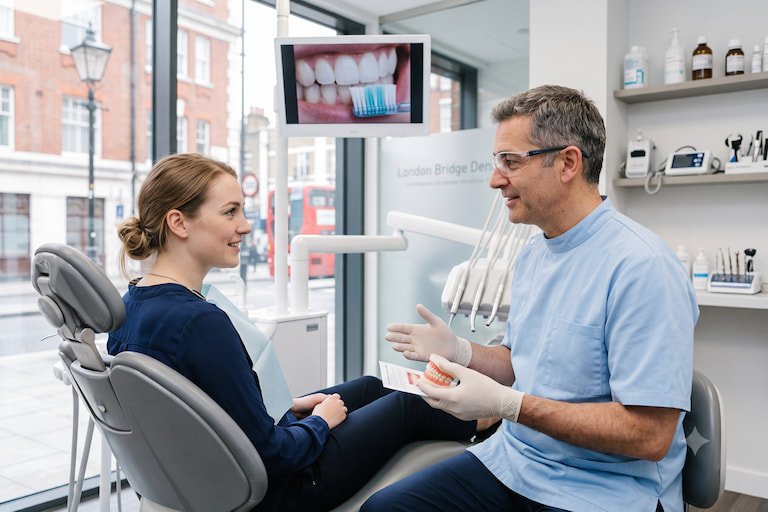
Teeth whitening can be an effective process with some patients having no problem when they finish. However, many people experience tooth sensitivity after using this procedure, which will usually only last 24 to 48 hours but may still cause some discomfort for 1 to 3 days following your treatment. There are also several things you can do to help minimise the sensitivity you will have after completing your tooth whitening.
What Causes Tooth Sensitivity after Teeth Whitening?
There are a number of reasons that could result in tooth sensitivity following your tooth whitening procedure. Below is a list of reasons for this sensitivity:
- To temporarily whiten your teeth, the whitening gels that are used to achieve the whitest possible smile will alter the structure of your tooth enamel. This causes your tooth enamel to be more porous and allows the nerves in the soft, inner dentin layer of your tooth to be exposed.
- The teeth whitening trays may put forces on the roots of your teeth while they are being whitened, which can also contribute to the development of tooth sensitivity.
- The whitening gel used to whiten your teeth may irritate your gums if the whitening gel runs onto the soft tissue of the gums while you are being treated, which will also make your teeth sensitive.
Steps to Follow Before Your Teeth Whitening Treatment
In order to minimise the sensitivity you may have following your tooth whitening procedure, you may want to consider taking the following preventative measures prior to your tooth whitening treatment:
- Brush teeth with desensitising toothpaste – Use a desensitising toothpaste for approximately ten days before your whitening procedure, so the toothpaste helps block nerve signals from reaching the inside of your tooth. To get the most benefit from your desensitising toothpaste, you should keep the toothpaste on the surface of your teeth for a period of time (like a few minutes) before rinsing it off.
- Use a desensitising gel – You should use a desensitising gel before your treatment. Use the gel according to package instructions and then rinse it off.
- Take over the counter medication for pain relief – Taking over the counter pain medications prior to your teeth whitening procedure may help lessen some of the sensitivity and discomfort. You may continue to use these medications after your treatment to relieve any remaining sensitivity.
Post–Teeth Whitening Care: Steps You Should Follow
After your procedure, the following suggestions may help to reduce the duration and severity of any tooth sensitivity you experience:
- Avoid eating or drinking anything that is too hot or cold – Your teeth will be very sensitive for the first couple of days following your treatment. Therefore, you should avoid eating and drinking anything that is too hot or cold for this time. Instead, stick with room temperature foods and drinks.
- Stay away from foods and drinks that have high acid levels – High acid foods and drinks, like sodas and citrus fruits, can irritate your mouth and make the sensitivity you have worse.
- Keep using desensitising toothpaste – Continue to brush with desensitising toothpaste or apply a desensitising product for the first two days after your whitening procedure to ease the initial sensitivity caused by your procedure.
- Brush softly – Use a tooth brush with soft bristles and rinse your mouth out with warm water to reduce any sensitivity.
- Use fluoride containing products – Using toothpaste or mouthwash with fluoride can help to re-mineralise your teeth and block the pain signals to your oral nerves.
- Drink through a straw – Using a straw to drink immediately after having a whitening treatment will help to reduce the amount of contact between liquid and your newly whitened teeth, which will reduce discomfort.
Professional Teeth Whitening Helps Reduce Sensitivity
The other thing you should always do is to avoid using over the counter whitening products to whiten your teeth. These products use generic trays and do not provide the exact fit of your mouth. Because of this, when you use the gel in these trays it will come in contact with your gums and cause the sensitivity you feel after your treatment to be greater.
St. Paul’s MD has numerous options for teeth whitening products (both in-office and at-home), that are infinitely better than store purchased items and are less likely to cause sensitivity when used correctly. The custom sized whitening trays used in our treatments fit snugly around your teeth to keep the whitening gel off of your gums, and allow us to monitor the whitening procedure carefully so that we can use the correct level of concentration of the whitening gel during the procedure.
Contact our Cosmetic Dentist
If you are interested in teeth whitening options, get in touch with dental clinic today! We have cosmetic dentists who operate patients from St. Paul’s, London and all across UK.
