

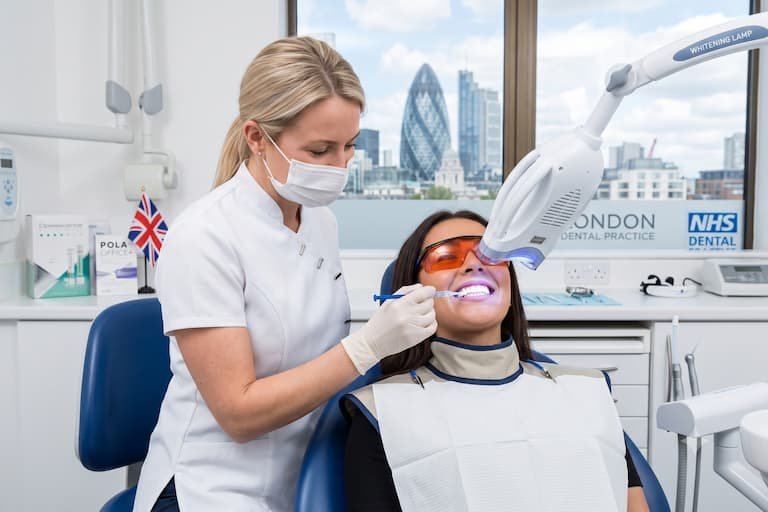
With so many options available, most patients are curious about how they can get whiter teeth through cosmetic dentistry while maintaining a healthy body., Because as you get older, you will find that the white, bright smile you once had may not be as bright or white as it was when you were young, but rather tend to be a bit more dingy due to the accumulation of food and drink over time.
If you are considering using a teeth whitening product that you have found at a store, you may be wondering if it is going to work or if it has any safety issues. No matter what type of teeth whitening you are considering, most adults believe that having a beautiful smile is a positive social asset and they have many questions regarding what options are available.
Teeth whitening is one of the easiest and most affordable ways to improve your smile. Plus, most of the methods for teeth whitening can be purchased from various retailers. However, before starting a teeth whitening regimen it is necessary to identify what you would like to achieve. Once you consult with your dentist, you can create a plan of action for what is the best way for you to proceed with your teeth whitening regimen.
The following are the three methods of teeth whitening:
How does teeth bleaching work – In-Office Whitening
A dental office visit is necessary to have your dentist apply a highly concentrated whitening gel. The actual time that your dentist takes to apply the gel is usually 20 to 30 minutes, to even up to an hour. The whitening gel can make your teeth sensitive; so your dentist may recommend using a desensitising toothpaste for some time following the whitening procedure. The in-office whitening process might require multiple appointments, and your dentist may provide custom-fit plastic mouth trays containing less concentrated whitening gel for use at home.
How to bleach your teeth at home?
At-home whitening is very similar to in-office whitening, except that you are using a less concentrated whitening gel at home in custom-fit plastic mouth trays. The maximum amount of time that you can wear the mouth trays at home will depend on the desired colour of your teeth, and you can stop whitening once your teeth reach the desired colour. However, after continuous usage, your teeth will reach a maximum whitening potential, and like in-office whitening, at-home whitening is often accompanied by a potentially lasting need for a desensitising toothpaste.
Whitening strips are another way to whiten teeth at home. These strips are applied directly to your teeth for an hour a day. The level of effectiveness from these over-the-counter whitening strips differs from user to user, just as it does with other types of at-home whitening products – like the use of dental trays. Using whitening strips is most effective for people whose teeth are entirely straight, as the forms of plastic that whitening strips come in need to be able to touch the entire exterior surface of the tooth. The cost of using whitening strips may also be greater than that of specially formulated whitening toothpastes.
Whitening Toothpastes
Some patients may find that using whitening toothpaste is a safe and effective alternative for their tooth whitening. While using whitening toothpastes, people do not only benefit from their whitening effects, but enjoy healthy teeth and gums at the same time. Following the directions on the package you purchase will help to get you started on the path towards having a brighter, healthier smile in as little as one week. Always remember while picking a whitening toothpaste – the best kinds of whitening toothpastes will contain fluoride, which is recommended by the dentist.
There is a variety of products available to help achieve whiter teeth. All three of the methods mentioned above will produce healthy white teeth when used in conjunction with good dental hygiene practices and by consulting with your dentist or dental hygienist before beginning any whitening program.
Which Food and Drinks Can Stain Your Teeth?
After achieving whiter teeth, you should use the following techniques to help keep your white smile healthy for the longest time possible! Implement a rigorous daily routine that includes brushing twice daily, flossing every day, and rinsing with an alcohol-free mouthwash (ideally twice daily). And it is also helpful to know which foods or drinks can damage or permanently stain your newly whitened tooth enamel.
Some common foods and beverages that will stain the whiteness of your new brighter teeth are dark coloured fruits, tea, coffee, soy sauce, colas, red wine, and curry. Following your teeth whitening treatment, you should eliminate these types of foods and drinks from your daily diet, or if you have to consume them, limit your consumption to only occasionally. If you want to maintain the benefits of whitening, you need to avoid these products for the first 48 hours following treatment, as this is when your teeth will be at their highest porosity.
It is also a good idea to refrain from using tobacco products, including cigarettes, during this time, if you can. After your treatment, you may want to try to eat foods that are light coloured and non-acidic, such as rice, chicken, fish, potatoes, tofu, pasta, and most dairy products.
Does bleaching teeth damage enamel?
Minor side effects can occur from teeth whitening. These minor side effects may include sensitivity to hot/cold, gum irritation, and impact on dental restorations.
Gum Irritation
The two most used active ingredients in teeth whitening products are hydrogen peroxide or carbamide peroxide. Whenever your dentist prescribes the whitening treatment – either an in-office treatment or an at-home whitening tray – it will have a higher concentration of the active agents than you could find in an over-the-counter product.
If the bleaching agents were to touch your gums, it can irritate them. Your dentist is very careful to protect your gum tissue when he/she uses the whitening agents. The in-office treatments utilise a barrier seal, and the at-home trays are made to fit your teeth, which limits the amount of whitening gel that actually comes in contact with your gums. If you have any irritation after using a whitening agent, it usually goes away on its own.
Tooth Sensitivity
Tooth sensitivity is a common side effect associated with all types of tooth bleaching. The reason tooth sensitivity occurs is because hydrogen peroxide irritates the dental pulp. The amount of irritation depends on several factors such as concentration of hydrogen peroxide, presence of dental restorations, or amount of whitening light utilised. Tooth sensitivity can be alleviated; here are some suggestions:
- Use specialised toothpaste for sensitive teeth.
- Reduce the time strips or trays are worn as per the product instructions.
- Ask your dentist about applying fluorides to help remineralise the teeth.
- Allow time (a few days) for your teeth to adjust before continuing with the whitening treatment.
Effects on Dental Restorations
Research indicates that certain whitening product systems can adversely affect dental restorative materials. But this is largely dependent on the type of material(s) used for the restorations. For example, hydrogen peroxide can accelerate the release of mercury from dental amalgam (in this case, the time of application, concentration of hydrogen peroxide, and age of the dental amalgam will also affect the amount of mercury released).
There are, however, other restoration materials (i.e. crown materials and implant materials) that have shown the greatest resistance against hydrogen peroxide. If you have a concern about how whitening products may affect your dental restorations, be sure to discuss this with your dentist.
Is it safe to bleach teeth – What to do?
When you are ready to begin using one of the many types of tooth whitening products to create a brighter smile, it is important to do so safely by following these steps:
1) Consult with your dentist. Having an examination by your dentist will help you determine the condition of your teeth and what problems, if any, exist (such as decay or gum disease). They need to be treated before starting a whitening program. Your dentist can provide recommendations for the best product for your needs and answer any questions you have regarding whitening your teeth.
2) Do not use over-the-counter (OTC) whitening products. The NHS states that many of the OTC whitening kits sold in the UK do not contain adequate amounts of active ingredients to produce noticeable results. Additionally, they may pose potential health risks to your teeth, gums and overall health. Your best course of action is to seek professional assistance from your dentist.
3) Follow the directions on the product label carefully. Each product will have specific recommendations regarding how long and how often to use it. If you use too much or incorrectly use the product, you could increase your chances of experiencing unwanted side effects, such as tooth sensitivity or gum irritation.
Is teeth whitening safe? Yes. Just like any other type of medical procedure, you should treat teeth whitening the same way! Follow the advice of your dentist, strictly adhere to the recommendations of the product, and be aware of any undesired side effects that may occur.
The Advantages and Disadvantages of Teeth Bleaching
As with many other health and beauty treatments, there are many advantages and disadvantages associated with bleaching (or whitening) your teeth. It is worth examining the pros and cons of bleaching when shopping for the right treatment for your individual needs.
Many individuals are curious as to what they may do to achieve a whiter smile from the comfort of their own home. They can achieve good results at home with various methods of whitening their teeth using such products as coconut oil (oil pulling), activated charcoal toothpaste, and a mixture of baking soda and hydrogen peroxide. However, it is unlikely that anyone will receive the same results from an at-home treatment as would be derived from a professional-quality whitening product or procedure being performed by a licensed dentist.
Bleaching has some pros, including:
- For the majority of individuals, the bleaching process and results are relatively fast, effective, and inexpensive compared to other dental services.
- The procedure of teeth bleaching should be virtually painless, and most who use this method will not feel any discomfort during the process.
- People often feel more confident when their teeth are whiter. They may feel more attractive, particularly if they have a lot of teeth missing or misaligned.
- Having a bleaching kit means you can easily keep your whitening treatment going whenever you want to. Once you have your trays made, just get some whitening gel from your dentist and keep it in your refrigerator.
- All bleaching products in a dental office are safe for use. Always follow the directions for use of any bleaching products at home, just as you would follow your dentist’s instructions when using them.
Some of the negatives associated with teeth bleaching include:
- It is common to feel some mild sensitivity or irritation while using bleaching products. However, this effect usually lasts only about three days after using the product.
- Misusing bleaching products can lead to damage and erosion of your teeth.
- Your fillings, veneers or crowns will not whiten when you do your bleaching.
How often to bleach teeth?
Each whitening system will have its own shelf life, whether it is in-office or at-home.
It is recommended, however, not to whiten more than once per year for the best outcome, as per the specific whitening system instructions. Keep in mind that overusing bleach to whiten your teeth could be dangerous and strip the enamel from the tooth surface, causing irreparable long-term damage to your teeth.
On a Final Note
Teeth whitening products are an effective way to enhance your smile. But the best way to ensure a bright smile is to take care of your dental health with good oral hygiene practices. Every whitening treatment is rated according to its longevity and effectiveness.
In general, however, patients should consider visiting their dentist one or two times annually to keep plaque and surface stains in check. For those who desire brighter, whiter teeth, teeth whitening products are effective tools, but they cannot replace good daily dental hygiene.
