

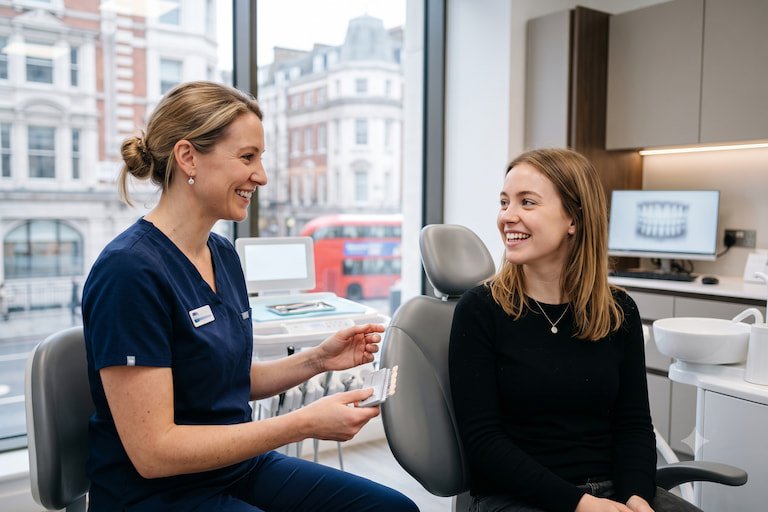
Professional tooth whitening is a very effective method of whitening natural teeth. However, it is critical that you maintain your teeth’s whiteness after treatment by maintaining good oral hygiene, avoiding staining substances, and following your dentist’s recommendations.
Let’s have a look at the key findings on professional teeth whitening.
What is Professional Teeth Whitening?
The main function of professional teeth whitening is to whiten and brighten your natural teeth. Most professional treatments take place at a dentist’s office, and they typically make use of stronger bleaching agents than are found in most over-the-counter bleaching products.
There are two primary types of professional teeth whitening:
- In-office whitening involves the application of a concentrated bleaching gel to your teeth by a dentist, usually accompanied by the application of either a special light or a laser to enhance the effects of the bleaching agent.
- Take-home whitening kits are provided to you by your dental professional and consist of custom-fitted trays and a stronger bleaching gel for you to use over time at home.
Both methods will help reduce the appearance of surface stains and reduce the amount of deeper teeth staining, allowing you to achieve a whiter smile faster than with an over-the-counter treatment.
What Kind of Stains Can Whitening Fix?
In general, there are three general types of stains you need to think about when deciding whether to whiten your teeth:
- Extrinsic stains: These types of stains affect the surface of your teeth and include things like smoking, drinking coffee, tea, wine, and being leached by metals from drinking or using water. These can typically be treated effectively with professional whitening.
- Intrinsic stains: Intrinsic stains refer to those that occur within the structure of your teeth. These stains are typically brought about through natural ageing, the medical use of certain medications during childhood, or prolonged overexposure to either naturally occurring high levels of fluoride in drinking water within the first five years of life or an unusually high amount of fluoride used in dental practices. Professional whitening may provide some assistance for these types of stains, but very often there are deeper-lying intrinsic stains. Therefore, additional treatments such as porcelain veneers or composite resin bonding will be necessary to achieve a fully restored appearance of your teeth after whitening.
- Combination stains: Combination stains consist of both extrinsic and intrinsic stains. Professional whitening will provide an improvement for both types of stains; nevertheless, people with significant intrinsic stains will usually require additional treatment following the completion of the professional whitening treatment.
Most extrinsic stains can be significantly reduced or removed using OTC whitening toothpaste. This is why you, in conjunction with your dental care provider, will determine the most effective method(s) of whitening your teeth based upon the type of stain and your combined goals.
What Professional Teeth Whitening cannot help with?
Professional teeth whitening will only work on your natural teeth. Professional whitening cannot change the colour of your fillings, crowns, veneers or dentures, and will not fix damaged teeth due to chips, crack or decay.
Advantages and Disadvantages
Being aware of the advantages and disadvantages of professional teeth whitening is the best way to determine whether professional tooth whitening is right for you.
Some of the advantages of professional teeth whitening are:
- Professional teeth whitening has a higher concentration of whitening agents than products sold at the retail level; thus providing faster and better results.
- Professional teeth whitening can be able to customise the method for you to achieve the exact shade of white that you desire based on your individual requirements, such as how many dental visits you have had, or if you have any sensitive areas.
- A professional teeth whitening treatment will result in whiter teeth for a longer duration than at home products, so if you consistently maintain good oral hygiene, your whitening results could last several months or even years. Therefore, many people will find the cost of professional teeth whitening to be worth it in the long run.
- Professional teeth whitening procedures utilise a dental technician who provides supervision throughout the procedure, providing additional protection for your gums and soft tissue. Therefore, the risk of experiencing pain, discomfort or damage to your soft tissue during the procedure is significantly reduced.
- Professional teeth whitening will produce a more attractive and positive appearance, which in turn, will raise your confidence levels. Many people will notice an improvement in their self-esteem after performing professional teeth whitening.
Disadvantages
- More expensive – Deciding to have your teeth whitened professionally tends to be far less affordable than purchasing whitening products from a store. The initial investment tends to be a barrier for some individuals.
- Potentially sensitive – After using a professional whitening treatment, many clients experience some degree of tooth sensitivity, particularly after stronger treatments performed by a dentist. Though this usually resolves itself, special toothpaste can help ease the discomfort. Very rarely (usually related to internal whitening), there is an extremely low probability of causing harm to the root of the tooth, known as external cervical resorption.
- Not permanent – The benefits of whitening your teeth eventually wear off, especially if you consume foods or beverages that cause stains on the teeth. As a result, you will require touch-ups to keep your teeth white.
Together with your dental team, you can establish how many sessions will be necessary to attain your desired shade of whiteness and how to maximise the length of time between touch-ups.
What to expect during Professional Teeth Whitening?
Although in-office tooth whitening is a straightforward process, it requires careful attention to protect the gums from irritation. Some dentists utilise lasers or LED lights to accelerate treatment times, which range from approximately 60 to 90 minutes.
- Your dentist will start the process by examining your mouth. If necessary, he or she will also take X-rays to determine the cause(s) of the discoloured areas.
- During this time, ask whether you have previously experienced hypersensitivity (sensitivity) to your teeth.
- In order to protect your gums, most dentists will place a rubber dam or some other type of barrier around your gums while the bleaching solution is on your teeth.
- Bleaching solutions typically contain hydrogen peroxide or carbamide peroxide.
- When using these solutions, some dentists will employ special lights or lasers to activate or develop the bleaching agents. Bleaching solutions remain on all treated teeth for 30 to 60 minutes after application.
- After this time, the dentist will remove the bleaching solution from the teeth.
- To achieve the desired level of whiteness, you will likely require multiple bleaching sessions.
In some cases, fluoride may be used prior to or during the bleaching process in order to minimise any potential discomfort from tooth sensitivity. Although fluoride does not affect how effective the crew is, it can make the overall experience less painful.
How long does Professional Teeth Whitening last?
Results from professional teeth whitening are not usually permanent. The results typically last anywhere from several months to several years, depending upon factors such as ambient light intensity, food and drink consumption, smoking habits, and other contributing environmental factors.
Potential Side Effects
Although teeth whitening can be done safely, there are still some minor side effects – especially for stronger treatments.
Here are some of these common side effects:
- Tooth Sensitivity: After use of a whitening treatment, it is common for people to feel a temporary sensitivity to hot and cold temperatures. This is typically caused by a mild and reversible temporary irritation to the inner layer of the tooth (pulp), known as pulpitis.
- Gum Irritation: You may experience a tingling sensation, burning or mild irritation to your gums when using a whitening gel. However, this is typically due to improper placement of the whitening gel onto your teeth or to the proximity of your gums to the gel itself.
- Enamel Weakening: While all products used for teeth whitening will have high concentrations of whitening agents, very high concentrations may weaken the outer layer of the tooth over time.
- Improper Use of Home Kits: Home kits can sometimes lead to tooth irritation or uneven results from leaving the gel on for too long or not rinsing out entirely after applying the gel to your teeth.
When whitening with the help of a dentist in a dental office, barriers are used to protect the gums during application. When using home whitening strips or trays, it is important to follow the instructions carefully and stop using them if discomfort occurs.
Are home whitening kits effective?
If whitening your teeth in office appears too expensive or too aggressive, a custom made home kit may be an option for you.
Take-home whitening kits that are custom made for you will include orthodontic trays specifically designed to fit your teeth. To create these kits, your dentist will need to make an impression of your teeth. It usually takes 1 to 2 weeks for the dentist to provide you with these trays once they have your impressions.
You will use the trays at home along with the whitening gel. You will apply the gel to the trays and place them in your mouth for 30 to 60 minutes each day. Most people will use the kit for 1 to 2 weeks, depending on their desired results.
The custom-made kits contain lower concentrations of hydrogen peroxide than in-office whitening products. Although you may see results with the custom kit sooner than with over-the-counter products, the results with the custom kit will take longer because of the lower concentration of hydrogen peroxide in the gel. The custom take-home kits typically allow for greater control over sensitivity during the whitening process than either in-office or over-the-counter products. Remember, just as with in-office whitening products, custom-made take-home whitening kits are considered cosmetic procedures and are generally not covered by dental insurance.
How to maintain your white teeth?
Taking care of your whitened teeth is very important for how long the whitened appearance will last after treatment. Teeth whitening do not result in permanent white teeth. However, with the right care of your teeth, the whitened appearance will last longer.
Following are things to avoid, especially the first 1 to 2 days post whitening treatment:
- Dark staining foods like tomato sauces, curry, beets, and black grapes
- Dark staining drinks like coffee, tea, red wine, soda, fruit juices, etc.
- Smoking and any type of tobacco use
- Dark stains – coloured candies, popsicles, and other dyed snacks
- Neglect oral hygiene – stains will settle easier
To keep your teeth whiter for longer, practice:
- Brush and floss daily – removes stains and plaque
- Use a whitening or fluoride toothpaste if recommended by your dentist
- Rinse your mouth with water after eating or drinking dark staining foods
- Visit your dentist for regular cleanings and check-ups
- Use a straw when drinking dark or acidic beverages
If you are developing sensitivity after whitening, ask provider about sensitive toothpaste or ask for prescription fluoride toothpaste for relief. With good habits, you can maintain your whiter smile for months or longer!
