

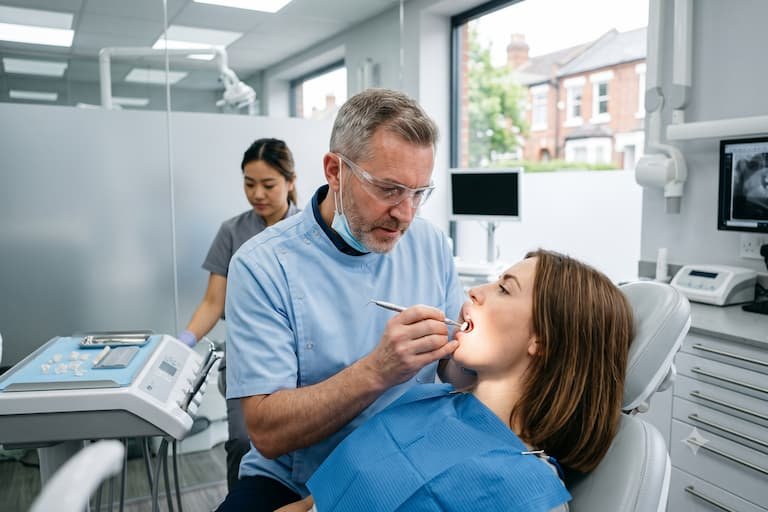
Veneers are composed of thin shells that cover the front surfaces of your teeth and enhance the appearance of your smile by providing better overall shape and colour to your teeth.
Dentists have used veneers for cosmetic purposes. If you have ever heard of the “Hollywood Smile”, you likely have heard of veneers!
There are a number of different types of veneers to choose from depending on your needs. However, most importantly, veneers offer an extremely natural-looking smile that will blend in well with your remaining teeth, does not require special maintenance, and has been reported to last over 10 years. One downside to veneers is that they can be pretty expensive and require some tooth structure (enamel) to be removed during the bonding procedure.
In this blog, you will learn about the various types of veneers, how they work, and their benefits and disadvantages.
What are Veneers?
Veneers are a permanent, false surface for teeth, typically used to cover broken, chipped, stained, or crooked teeth. Dentists who specialise in cosmetic dental work will create customised veneers to cover up any specific aesthetic issues with those teeth, including gaps, cracks, chips, and discoloured teeth, out of materials like porcelain or composite resins.
To place a veneer on a tooth, a small amount of enamel is taken away from the front portion of that tooth, which helps with the natural appearance of the veneer. Before this occurs, the dentist will take a mould or impression of your teeth. This mould will be sent to a dental lab, which will use this information to custom fabricate your veneers based on your individual tooth shape and shade. Most often, you will be provided with temporary veneers to wear while your final veneers are being completed at the lab. Then, when you return for your follow-up appointment, your dentist will clean and adjust the new veneer before bonding it to your tooth.
The primary difference between veneers and dental crowns is that where a crown restores a badly damaged or broken tooth by covering the entire tooth, a veneer is placed on the front of the tooth and does not restore the tooth in any way. Therefore, the only purpose of a veneer is to enhance the overall appearance of the tooth. Dental insurance typically will not cover veneers because they are classified as an elective or cosmetic procedure.
Who are suitable for veneers?
Veneers can work well for just about anyone interested in making cosmetic improvements to their teeth by talking to their dentist about their options. Though veneers do not fix any specific problems, a dentist may recommend veneers to cover up or alter the appearance of a few cosmetic problems. For example, veneers can cover up:
- A broken tooth
- A chipped tooth
- Gaps between your teeth
- Stained teeth that can no longer be whitened
- Crooked or misshaped teeth
However, you probably won’t be an ideal candidate for veneers if you also have any of these conditions:
- You clench or grind your teeth because this can cause your veneers to chip or break.
- You have an overbite.
- You have gum disease or cavities; your dentist will not be able to attach the veneer to the unhealthy gum or tooth, so they will probably want to treat those issues first.
Types of Veneers
There are several different types of veneers available based on the material they are made from and how much enamel the dentist needs to remove before placing them. To choose the right type of veneer for you, consider factors like cost, durability, how much preparation takes place, and how long the veneers will last.
Porcelain Veneers
These are customised, thin shell coverings applied to the front of the teeth by a dentist. However, they are generally more expensive than other varieties of veneers, yet they look exceptionally natural, wear well, and have the greatest longevity. The dentist also removes less of the tooth’s enamel for these types of veneers than they would if using a crown. These types of veneers do not stain easily.
Composite Veneers
They are fabricated out of the same material as the filling material used on your teeth and will be the colour of your natural teeth. In addition, they require less tooth enamel removal and fewer visits to the dentist for application than porcelain veneers, and they can be repaired more easily if damaged. However, they do wear down faster than porcelain veneers and are more easily stained by substances. Composite veneers can typically be made in one visit and are less expensive than porcelain veneers.
No-Prep and Minimal-Prep Veneers
They require less enamel removal than any of the other types of veneers. Additionally, the preparation and application of these veneers does not require anaesthesia and are reversible if desired. The best candidates for this type of veneer are those with small or well-proportioned teeth. However, your dentist can provide information about whether you are a good candidate for no-prep veneers.
Removable Veneers
Removable dental veneers are a new alternative to traditional permanent veneers for changing the shape of teeth without making any permanent alterations. Removable or snap-on veneers work in the same way as traditional veneers by covering the tooth’s surface to hide irregularities. However, these removable veneers can be removed at any time.
While removable veneers are attached to teeth, they may affect how well you can eat and speak. Because they are a relatively new option for cosmetic improvement, more data is needed to evaluate the long-term effects of wearing removable veneers. Therefore, it is important to discuss with your dentist if removable veneers are an appropriate option for you.
Benefits & Drawbacks of Veneers
Veneers are not a solution for every patient and have pros and cons that vary from one patient to another. The various types of veneers, including those made of porcelain and those made of composite materials, have unique advantages and drawbacks. For example, porcelain veneers are more expensive than composite veneers, but they tend to be stronger and have greater resistance to staining than composite veneers.
Pros
Veneer types of ceramic covering apply a thin layer comprised of porcelain or a composite resin to the front surface of teeth to create a more even appearance. The result is usually a smile that appears whiter, straighter, or covers such issues as darkly stained, cracked, or chipped teeth, while still blending in with the individual’s real tooth colour. Furthermore, they are less prone to staining than natural enamel, require no extra care, and can last up to 15 years with proper aftercare.
The only issue with the ceramic covering is that many dentists will first need to remove some enamel from the individual’s tooth for the veneer to properly bond to it. However, the amount of enamel removed with veneer application is less than what would have been removed if other alternative forms of dental work had been performed.
Cons
All veneer types require the sacrifice of the natural enamel on the individual tooth in question. A dentist will need to remove some of the enamel from the front surface of the tooth before placing the dental composite or placing a porcelain veneer over the natural enamel. Porcelain veneers will also make the natural teeth much more resound to changes in temperature (i.e. hot to cold, etc.) than natural enamel.
The ceramic covering is also susceptible to cracking and loosening depending on an individual’s grinding habits or possibly from his/her pain involving their jaw joint dysfunction. Once the ceramic covering becomes cracked or becomes loose, additional work might be needed to repair, re-establish, or replace the ceramic covering.
Lastly, the cost associated with the ceramic covering process may be prohibitive to many, although some lower cost alternatives are available. Most health benefit plans or dental insurance will typically deny payments for the entire costs associated with the ceramic covering process, because the dentist considers the ceramic covering to be demi-cosmetic in nature.
Be mindful that several so-called “veneer technicians” who are not licensed exist in your area, so there are potential risks associated with them. So, make sure to get the names of several licensed cosmetic dentists for veneers prior to consenting to any form of treatment, as they will be able to protect your safety from possible infections or nerve damage.
What is the cost of veneers?
The cost of dental veneers can range greatly based on a number of factors, including:
- The type of veneer
- Where you live
- The experience of the dentist doing your veneers
- The brand of veneer you choose
- The number of teeth being treated
- How much work they need prior to placing your veneers
- The kind of materials that will be used
Generally speaking, veneers are not covered by dental insurance since they fall into the category of cosmetic dentistry. Porcelain veneers cost the most and last approximately 10 to 15 years – the average range would be $1,000 to $2,500 per tooth. On the other hand, composite veneers cost approximately $400 to $2,000 per tooth and last approximately 5 to 7 years. The pricing of no-prep veneers varies based on brand, but for example, Lumineers can cost between $800 and $2,000 per tooth.
Cosmetic dentists frequently provide financing options or payment plans for veneers. If the cost of the veneers is a deciding factor in whether you would like to pursue it and if your dentist recommends you to get them, you should inquire about a monthly payment plan or how they can help with third party financing options.
Recovery and Outlook
After receiving veneers, it may feel awkward or uncomfortable, and could potentially disrupt your biting. As you get used to the new veneers, they will likely be adjusted by your dentist at your appointment, and should begin to feel normal after a few days.
Generally speaking, you should not experience negative effects from the procedure and can return to your regular schedule on that very day of your appointment. After the anaesthetic has worn off from the procedure, it is safe to eat or drink. With good care and maintenance, average dental veneers last between 10 and 15 years. However, this can vary greatly based on the kind(s) and materials of the veneers.
- To care for your veneers, brush your teeth two times daily with non-abrasive fluoride toothpaste and soft bristled toothbrush.
- Rinse with antibacterial mouthwash twice each day and floss between your teeth every day to help prevent cavities which can also develop under a veneer as well.
- Do not use your teeth as a tool to open packaging, tools or anything else. Do not bite your fingernails or chew on hard items (as they may break) to protect your veneers.
- You should schedule regular appointments with your dentist for both check-ups and cleanings to help you keep on track with your proper care of your veneer(s).
- If you play sports that involve heavy competition, you may want to discuss wearing a mouth guard to help protect your teeth from damage to your veneers.
Final Takeaways
Veneers can be a permanent solution for poor appearance, teeth that have been broken, chipped or have stains. You should feel comfortable committing to this type of treatment with only a licensed and insured cosmetic dentist professional, as there may be some risks of infection and nerve damage associated with this type of procedure.
Veneers are not a good option for everyone. If you have concerns about the appearance of your teeth, you should consult a licensed dentist to discuss if you are fit for veneers as well as other available options.
