

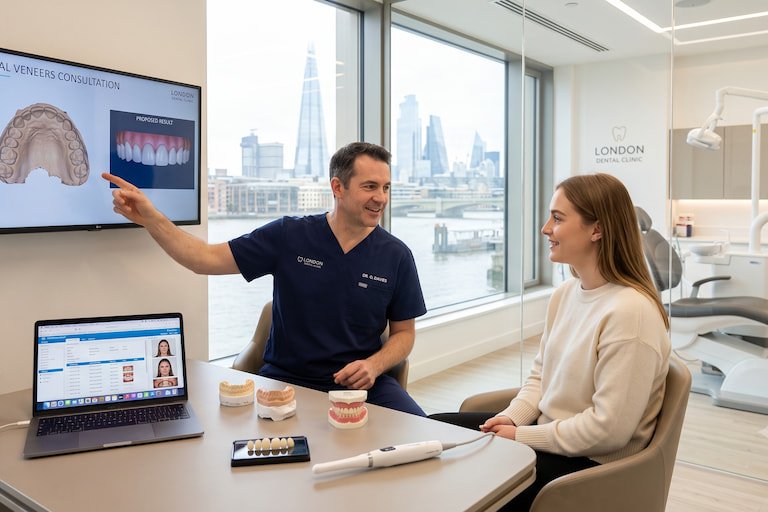
Upon first glance, most people will notice your smile! However, it is proven that if your teeth are misaligned then your confidence levels can be greatly affected by whether you have a perfect set of pearly whites to show off. For the majority of people, it is those small imperfections in their smile that stop them from not being able to smile without hesitation; insecurities take over.
So what is the answer? Porcelain veneers, of course! There are many different types and styles of cosmetic dental work and educating yourself about the uses, benefits and application of veneers will place you in a position where you can make an educated decision about moving forward with this particular treatment option.
What are porcelain veneers and who are they right for?
They are thin, translucent (not opaque), porcelain shells that are bonded on to the front of your teeth to change their overall appearance (shape, size, colour), so that they match and compliment your existing adjacent teeth. This provides you with an aesthetically beautiful and uniform smile while allowing you to have perfectly straight and safe looking teeth; having gone through a beautiful procedure that is considered much cheaper, easier and shorter than wearing braces.
You might want to consider getting veneers if you have damaged, cracked, slightly crooked, or deeply stained teeth; have gaps in between your teeth; or have an uneven alignment of your teeth. Many people choose this route to correct their teeth rather than going through an orthodontic procedure as it is a quicker and less noticeable solution.
All patients who are suitable candidates for dental veneers must have a healthy mouth with no signs of disease present in either the gums or teeth. Therefore, having your oral health properly assessed by your dentist will confirm whether you qualify for veneers or not.
Understanding Two Major Types: Traditional Veneers vs. Ultra Thin Veneers
There are two main types of veneers available – standard (traditional) veneers and ultra-thin veneers (also called “lumineers”). When comparing standard veneers to ultra-thin veneers, both types of veneer offer the same benefits but differ in thickness and the degree of tooth preparation necessary prior to bonding the veneer.
| Features | Traditional Veneers | Ultra-thin Veneers |
| What they are? | Thin shells that are custom made to fit on the front surface of your teeth while improving aesthetics. | Ultra-thin shells that need minimal to no removal of tooth enamel. |
| Thickness | About 0.5 to 0.7 mm | About 0.2 to 0.3 mm (much thinner) |
| Need for Preparation | Needs slight removal of enamel to bond properly. | Usually minimal to no preparation needed, allowing greater enamel preservation. |
| Material Used | Composite resin or porcelain. | Usually ceramic or porcelain. |
| Aesthetics | Highly aesthetic; resembles natural enamel. | more natural looking and translucent, perfect for minor corrections. |
| Durability | Extremely strong and durable; lasts about 10 to 15 years. | Slightly less durable because of its ultra-thin nature; last about 8 to 12 years. |
| Suitable for? | Patients with worn, chipped, discoloured teeth or having slight tooth misalignment. | Patients having small teeth gaps, minor shape changes, or mild discolouration. |
| Cost | Slightly expensive for the necessary tooth preparation and lab work. | Comparatively cheaper, based on its type. |
The Veneers Procedure: What to Expect
Many people think that getting veneers is a long, painful experience. In reality, getting veneers is relatively short; it is just a series of steps in which each veneer is custom-fit for your smile using two to three appointments.
To begin, your dentist will measure and prepare your teeth by removing a small portion of enamel. This is to help ensure proper seating and secure fit. Dental impressions or STL scans of your prepared teeth will be made and sent to our dental laboratory; our laboratory will fabricate your custom-fitted veneers according to the specifications provided by your dentist.
During your second appointment, your dentist will verify the shape, fit, and shade of your veneers prior to bonding them to your teeth with a special bonding agent. In addition, they will add a final polish to each of your veneers to make them look like natural enamel.
A skilled dentist will create an effortless, smooth, relaxed, and enjoyable overall experience while providing you with the highest quality dental care possible.
Advantages of Veneers Extend Simply Beyond Cosmetic Appeal
While it is clear that there is a visual difference between teeth before and after having veneers, there are several other advantages to receiving veneers that are often overlooked.
Some of the common benefits of completing a veneer procedure include:
- A long-lasting beautiful appearance and resistant to discolouration or staining due to the material (porcelain) used to make the veneer.
- The veneers appear very natural and blend well with your existing tooth structure.
- Veneers can be completed very quickly and do not require orthodontic braces or surgical procedures.
- The care of veneers is similar to that of your own teeth – regular brushing and professional dental cleanings and check-ups are all that is needed.
- Patients have reported feeling more confident when communicating, smiling and interacting in social settings due to the finished look of their veneers.
Since most people consider how they feel after getting veneers, they report that they are smiling more, talking more confidently and feel better about themselves in social situations than before having the veneer procedure performed.
The comfort and confidence gained through this process can significantly improve your overall quality of life in ways you might not anticipate.
Importance of Choosing an Appropriate Dental Practice
Cosmetic dentistry involves a substantial amount of artistry and careful planning to ensure each patient receives a “perfect” cosmetic result. A knowledgeable and experienced dental team will help you obtain the cosmetic results you desire by evaluating the shape of your face, the natural shade of your teeth, and how light reflects on your smile. It is these small details that make the final result of your completed veneers appear natural and last for many years to come.
Porcelain veneers typically have a lifespan of between 10 and 15 years, if they are taken care of properly. So getting them to stay on without cracking or coming off requires an appropriate plan and very careful placement (neither can be performed effectively without proper care). A good dental clinic will not only provide good results but will also provide the necessary post-care and guidelines to help you maintain your veneers as you are meant to.
What to Expect After Getting Veneers
After the veneer procedure, you can go about your normal routine immediately; there normally is no downtime. Although many individuals who have just had veneers placed may have some measure of mild sensitivity for a few days, that will go away quickly.
Taking care of your veneers is not difficult. Just be sure to brush at least twice each day and floss regularly. Do not bite extremely hard foods or use your teeth to open bottles or packaging materials. Regular visits with your dentist will maintain both the health of the veneers themselves and the underlying natural teeth.
Conclusion
Having a great smile does not always mean having major alterations done! There are small, targeted options available such as using veneers that could dramatically change how you look and feel about yourself. There are both visual and emotional benefits to the use of veneers.
If you are considering this treatment option, then it is essential to get individualised care from a qualified dentist who understands what you want. You can expect the best results for your smile enhancements at St. Paul’s MD with the training, experience and professionalism of our staff. Our dental professionals will provide you with the most patient-centred approach to treatment that will ensure your experience is pleasant from beginning to end.
