

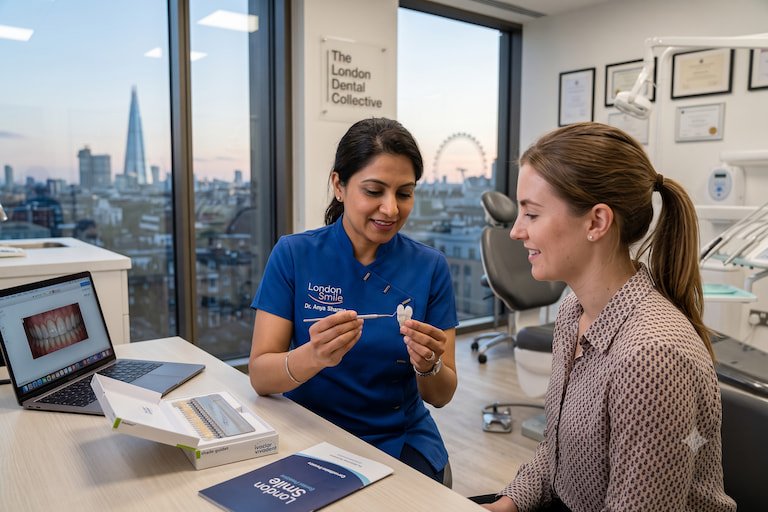
Cosmetic dentists use veneers to improve how teeth look. They are an extremely thin layer of material that covers the visible face of a tooth, which can make it whiter, straighter, and stronger. Veneers are made from either porcelain or composite resin. They are used to restore broken, chipped or cracked teeth, correct tooth discolouration, correct crowding issues (crowding occurs when teeth are entangled), and fix teeth misalignment.
There are a few types of veneers – Lumineers (which are more affordable than traditional porcelain veneers and require less preparation for insertion); traditional porcelain crowns (which are thicker than Lumineers but provide a stronger aspect of bonding); and minimal-preparation composite veneers (which are less adhesive and will require re-bonding with dental cement after time due to their thinning properties).
What are Veneers?
Traditional veneers are made of porcelain or composite resin; they are placed over teeth that have lost their normal white colour due to being too shiny or due to cracks or chips or worn enamel. After having your dentist take impressions and build a facsimile of your total mouth, a set of porcelain veneers will be custom-fit for each tooth.
Who can benefit from having porcelain veneers? Here are some examples:
- Wearing of Enamel As You Get Older: As we age, our tooth enamel becomes dull.
- Cracked or Chipped Teeth: Tooth enamel can be damaged due to accidents, tooth breakage from eating hard objects, or the natural process of ageing.
- Space between Teeth: Veneers can help to correct crowded teeth or gaps where separate teeth meet.
- Crooked teeth: Some people have teeth that are not only crooked but also the fit of their bite is affected. Some treatment options to correct uneven or crooked teeth with dental veneers may help to fix the problem.
- Discoloured teeth: Dental veneers can brighten or whiten a smile quickly and easily by covering discoloured or stained teeth.
You will need to remove some of your existing teeth structure in order to prepare for placing the new veneer. This is typically done by holding off on putting the final veneers until your dentist has taken impressions for you, and you will have temporary dental veneers until your dentist produces the final product.
What are Lumineers?
Lumineer is a thin shell-like cap that is manufactured from a special ceramic composite material that is placed onto the front of the tooth or the tooth itself. The impression and images of the teeth are sent to the Lumineer manufacturing lab to create caps that will match the overall appearance of your smile. Minimal to no reshaping will need to take place during placement of Lumineers and other no-prep types of veneers.
Like dental veneers, the use of Lumineers can also instantly change how your smile looks. Lumineers are used for the following:
- Fixing the spacing between teeth
- Correcting different sizes and shapes of teeth
- Fixing incredibly crooked or misaligned teeth
- Brightening or whitening the colour of teeth
- Provide you with an instant smile improvement
Pros and Cons
Veneers
Originally developed in the 1930s, porcelain veneer has become a staple in cosmetic dentistry as have the resin composite types. Why are these great choices to help correct your smile? Here are some features of both porcelain and resin-composite veneers:
- Effectiveness: The results of both porcelain and resin-composite veneers leave teeth with a lot of brightness and whiteness, and both types of veneers work well correcting such issues as gaps, chips, and a minor misalignment of teeth. Patient satisfaction is very high, and the chances of overall success are also very high.
- Staining Resistance: Research has demonstrated that veneers do an effective job of preventing stain formation on the tooth underneath – for upto 5 years. Good oral hygiene can help to prevent this from happening again at that point.
- Longevity: The expected life of porcelain veneers is 15 years. The longevity of resin composite veneers is somewhat less, with 80% of the composite veneers still functioning well after 5 years, but at 7 years you may need a replacement.
On the other hand, traditional veneers also do have some disadvantages, which include:
- Invasiveness: The installation of traditional veneers (porcelain) is a much more invasive procedure. The dentist will need to do some reshaping and grinding of the tooth in order to prepare it. This process usually requires a local anaesthetic or other form of pain control. Additionally, this is an irreversible process.
- Time: While there will be some variation from person to person, if you are having porcelain veneers placed, you can expect to have a minimum of two appointments and a maximum treatment time frame of four to six weeks. The preparation of the caps requires imaging and impressions to create them properly which will usually take place away from the dentist. You will generally receive a temporary set of veneers until your final set is ready.
- Costs: Traditional porcelain veneers can vary greatly in cost depending on the type of material used. On average, traditional veneers cost more than all-ceramic or other modern materials available today. Prices for traditional porcelain veneers vary from $925 to $2500 per unit and from $800 to $1500 per unit for composite veneers.
Lumineers
Lumineers and other new tooth coverings such as no-preparation veneers offer immediate benefits to patients.
- Less invasive: They can be less painful due to the fact that there is no preparation, shaving of tooth structure, or grinding required with Lumineers. Anaesthesia is not necessary during the placement of Lumineers, making them a very non-invasive procedure.
- Quicker results: Patients prefer to use Lumineers because they will receive their finished tooth covering much sooner than if they were using a more traditional preparation method. There will also be fewer appointments needed and the time spent in the dental office will be less with Lumineers than with many other types of veneers. In addition, they can easily be removed and replaced.
- Cost: Generally speaking, Lumineers cost significantly less than traditional veneers, though the final price will depend on the individual’s situation. Cost of no-prep veneers ranges from $800 to $2,000 per tooth.
However, there are two significant disadvantages to no-prep veneers:
- Limited Efficacy: In some instances, no prep veneers such as Lumineers will not resolve coffee stains or discolouration. Because they are thinner than traditional porcelain or composite no-enamel materials, they may not be successful in restoring a tooth with a more extreme stain or discolouration.
- Lower Durability: While traditional veneers and Lumineers – both typically last from 5 to 20 years, they tend to be somewhat less durable than traditional veneers. Therefore, special consideration must be given when brushing Lumineers. The longevity of the no-prep veneer held to the tooth will rely on the type of adhesive used to bond it to the tooth.
So What Should You Choose: Veneers or Lumineers?
Both types of veneers are effective cosmetic corrections. Ultimately, the decision regarding which to use will depend upon you and your individual situation, as determined by your dentist. Some of the issues you should discuss with your dentist as part of the decision to use either a veneer or a Lumineer for your cosmetic correction are:
- Degree of Severity: In general, traditional veneers will usually cover stains or discoloured teeth better than Lumineers or no-enamel veneers due to their restorative effectiveness. Furthermore, a Lumineer may not be an appropriate solution for correcting a dental misalignment or dental malformation due to its limited capacity to provide sufficient coverage for all types of tooth problems.
- Timing: Lumineers and no-prep veneers generally require a shorter number of appointments than conventional veneers, because they take less time and labour to install.
- Invasiveness: Typically, the process for placing traditional veneers will require greater tooth reduction (filing/drilling/grinding) than that of the insertion of no-prep veneers, which provides no irreversible effects on the tooth structure. No-prep veneers can usually be placed with very little or no discomfort for the patient.
- Durability: Porcelain veneers are remarkably durable and can last up to 15 years or longer. Lumineers, on the other hand, do not last as long as traditional porcelain veneers, but they can still endure the wear and tear of daily use.
- Costs: There can be significant differences in your out-of-pocket treatment costs in case of traditional veneers and Lumineers. Depending on the cost of veneers, you may incur fewer total payments, because you will require fewer visits to receive treatment. Most cosmetic procedures are not provided by your dental insurance, so you should inquire with your dentist about available options for financing your cosmetic procedures.
Veneers and Orthodontics
Veneers or Lumineers alone cannot correct certain cosmetic issues with teeth. You may need to consider the use of orthodontic procedures (braces or aligners) or restorative procedures to treat the misaligned or crowding tooth issues.
Questions to Ask Your Dentist about Veneers and Lumineers
If you are thinking about making cosmetic adjustments to your smile, it is important you research all your available options. When communicating with your dentist or dental office professionals, there are several important questions you should ask:
- What are my options other than Lumineers or veneers?
- How does this procedure affect my tooth or teeth?
- What are the different types of special care I should take for Lumineers and veneers?
- What are the different ways I can prevent my teeth from being discoloured or damaged?
- How long should I wait between visits for check-ups?
- What symptoms should I watch for in my mouth?
- About how much will the procedure cost, and is there financing available? Will insurance cover this treatment?
Are you thinking about getting a brighter, more natural looking smile, but unsure of which method will produce that smile? A personalised consultation with a qualified cosmetic dentist can be a game changer. Schedule an appointment today to find out whether veneers or lumineers are right for you, so you can start afresh with a confident smile after getting your new pearly whites!
Frequently Asked Questions
What is the cost difference between Lumineers and veneers?
The price for each tooth varies considerably depending on treatment, as Lumineers range from $800 to $2,000 and traditional veneers range from $1,000 to $2,500. Since Lumineers require less multiple visits or extra visits than veneers, therefore the cost will be additionally high for all of your Lumineer procedures than for any of your porcelain veneer procedures.
How long do Lumineers last?
Lumineers will last between 5 years to over 20 years, if they are well taken care of. Compared to porcelain veneers they are not as durable and may be more prone to staining and discolouration than veneers. Good oral hygiene practices and extra care during brushing will help preserve the colour of Lumineers.
Will Lumineers damage the teeth?
As they are minimally invasive, Lumineers do not affect the teeth as much as other types of veneers do. Unlike traditional (non-lumineer) veneers, prior to installing a traditional veneer, enamel must be removed from teeth. However, if Lumineers are placed incorrectly, there is still some potential for damage to the teeth.
How much do Lumineers cost?
The cost of placing Lumineers will vary depending on how much work is required in preparing the patient’s mouth for their even placement (imaging and examining). Lumineers’ price typically ranges between 800 and 2000 dollars per tooth being treated. Generally speaking, most cosmetic dental work does not have insurance benefits and prices have a significant amount of variation based on how much work is being conducted.
Are there adverse effects of getting lumineers?
While the placement of Lumineers is not generally invasive and most people tolerate them well, there may be a few side effects associated with Lumineers:
- Lumineers may crack if they are not placed properly.
- Some patients report sensitivity or discomfort from their Lumineer.
- Patients report that their Lumineers do not match the other teeth in colour or that they have some irregularities in regard to colour.
- Patients may have tooth damage, although rare.
