

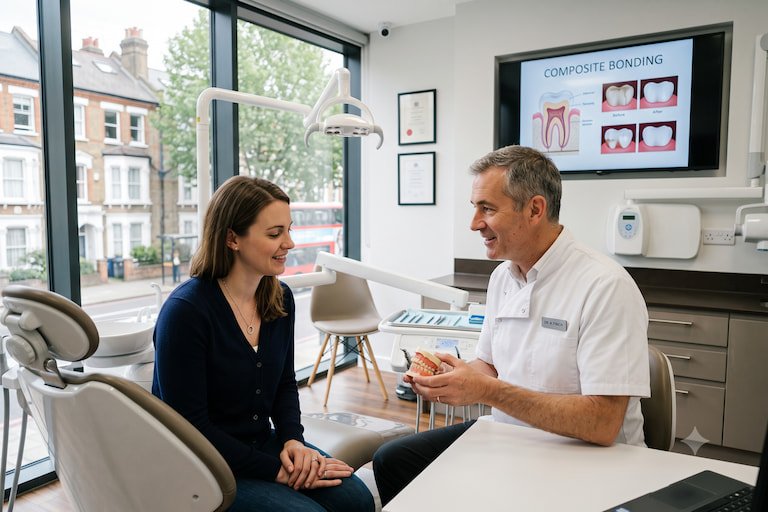
Have you ever experienced a dental cavity? Or ever had a tooth that has been fractured or chipped? Have you ever had stained teeth that you are unable to remove the stains out?
If your answer is yes to any of these questions, then you may have already been seen by a dentist or will have a visit in the near future where you will have a filling done.
What types of fillings are available?
There are numerous types of materials available for use in filling a cavity and repairing a fractured tooth. When people refer to filling materials, they often use gold as a measuring stick for comparing filling materials (people’s bodies love gold!).
We can start with gold as our reference point, but what about other metals that we use to restore a decayed or chipped tooth?
Amalgam (silver) fillings have been in use for decades and have demonstrated a long history of being widely utilised in dentistry as a filling material.
The next category of materials used in the restoration process is glass ionomers and resin modified glass ionomers. These materials are beneficial because of the fluoride they emit, which aids in the remineralisation of the tooth structure. They are tooth coloured but do not have a large amount of shade variety. These materials are extremely beneficial to use with children’s primary teeth!
Let us explore one of the most popular filling materials, composite resin (i.e., composite material) when we refer to tooth-coloured.
What is composite resin?
Composite resin is a tooth-coloured material created to be an attractive alternative to amalgam. Composite resin can be produced with many shades being available. How you insert (place) composite resin will depend on a separate, specialised technique incorporating dental bonding.
What is dental bonding?
Dental bonding, also known as tooth bonding, is a technical procedure requiring due diligence that allows a dentist to prepare (get ready) the surface, clean the surface, and apply a bonding material as a double-sided tape with which the dentist attaches the composite resin material. There is a wide variety of bonding materials available to your dentist depending on the placement of the composite resin is executed. Each bonding system has its own rules and regulations to follow when applying the bond. The only thing you need to remember is whatever bonding system your dentist has decided to use, he/she must feel confident that he/she is qualified and competent enough to place the composite resin on you.
Dental bonding is the process of preparing a tooth to be bonded with the composite resin material. To start this process, the space between the tooth and the bonding material requires preparation (i.e., removal of any decay).
To prepare your dental bonding
Before receiving your composite resin, the dentist will first remove all of the decay from the tooth to allow for adhesion between the resin and the tooth (like putting tape on wet surface). When the surface of the tooth is prepared, the dentist will then place a bonding agent and add retentive features for locking the teeth together to hold the composite resin material in place.
Once the tooth has been prepped and is ready for cleaning, the “prep area” will need to be isolated from surrounding areas to keep it dry because the composite resin material needs to dry before any re-nailing can occur.
Cleaning the teeth for dental bonding
So now that your tooth has been prepped and is ready to be cleaned with the use of a special device that works in the same way as a saw cuts wood. It cuts through the water, nut and dirt that would be all over the item you just cut. Just as saw dust collects around a woodworking shop, teeth collect plaque and bacteria. The more effort you make in keeping your teeth clean, the easier they will be to clean and overall healthier they will be!
Preparing a tooth to accept a dental bonding material is similar to preparing a surface for adhesion. The dentist will first use an acid etch to dissolve any tooth dust that was created during drilling. After the tooth has been acid etched, the dentist will apply a primer to the tooth’s surface to prep it for bonding with dental bonding materials.
Double-sided tape?
Then a bonding agent is applied to the tooth and the dentist scrubs the bonding agent onto the tooth very well. The reason that your teeth can hold onto dental bonding materials is because of the existence of small holes in the tooth surface, which are called dental tubules. The acid etch cleans the tooth surface of any tooth dust that is adhering to the surfaces of the dental tubules, thus allowing them to be exposed. The bonding agent is then scrubbed onto the tooth surfaces to allow the bonding agent to flow into the small holes of the dental tubules.
After the bonding agent has been scrubbed onto the tooth, the dentist will cure the bonding material with a special ultraviolet light that is set at a specific wavelength to allow the bonding material to harden and securely set into the dental tubules. Thus, after curing, the hardened bonding material provides a tacky surface for the composite resin to adhere to. The tacky surface of the cured bonding material acts like double sided tape, to bond the composite resin to the natural tooth.
Composite Resin
Your dentist uses a shade guide when matching the composite resin to your adjacent teeth. One of the main reasons to use composite resins is their ability to be made in various shades.
Composite resins are available in two consistencies; one is a thicker consistency (sometimes referred to as packable composite), and the other is a thinner, more liquid consistency, (often referred to as flowable composite). To put this in perspective, thick packable composite resins would be compared to play dough while flowable composite resins can be compared to liquid glue.
The first step is placing small amounts of composite on your tooth in increments, shaping it in an attempt to match the characteristics of the adjacent teeth. After the composite is shaped, it is cured with the use of a UV light.
This procedure takes a very short amount of time and allows the dentist to restore several teeth in one visit.
How much is composite bonding?
Cost of composite bonding will vary between offices and estimate between $125 and $1,000 per tooth is a rough overall average.
The price of the various composite resins is dependent on the total number of surfaces being restored by your dentist.
A larger cavity or fracture will require complete restoration of both the tooth in which the restoration will occur and that surface’s adjacent teeth. Your dentist will identify which surfaces will be restored and will use this information in calculating the price for each tooth separately.
Cosmetic Dentistry
Teeth bonding can be used for many procedures including veneers and crowns in restorative dentistry. Many people are aware of cosmetic dental procedures now because of social media.
Cosmetic dentistry is exactly that… it is cosmetic treatment of your teeth!
Cosmetic dentistry includes the use of veneers and crowns on your teeth to close small gaps, change the appearance of teeth that are stained or discoloured, and generally improve the overall aesthetic of a person’s smile. A new smile can increase a person’s level of self-esteem and enhance their wellbeing.
Will insurance pay for cosmetic dentistry?
Most dental insurance providers will not cover or have very limited coverage for cosmetic procedures. If they do have coverage available, they want the dental surgeon’s office to provide them with proper explanation of how the cosmetic procedure is necessary for structural purposes, and that the overall health of the patient is stable enough to be covered for the procedure.
You will save money on dental treatment by practising good oral hygiene! Do not depend upon your dental insurance!
Dental Treatment is not Expensive, Negligence is!
When a person has poor dental hygiene, they are susceptible to developing gum disease, which can cause instability in the person’s teeth and limit their ability to receive restorative treatment.
The costs associated with dental work vary greatly depending on the type of dental work completed. Most dental insurance plans have very stated costs per tooth, and this amount can vary between the front (anterior) and back (posterior) teeth as well.
If you neglect to maintain the health of your teeth, you may incur additional costs to your dental plan, and your insurance may cover a smaller portion of the costs; therefore costing you more money.
Chipped Tooth
Accidents can cause chipping of teeth. However, you can restore a chipped tooth through dental bonding, which can also be a cosmetic procedure depending on the type of fracture (the way in which the tooth has cracked), location of the fracture, and severity of the fracture.
In addition, because there are so many different variables that can determine the costs associated with the dental bonding procedure, your dentist will be the best resource for providing estimates of what the costs will be for you individually.
Stained Teeth
If you have stained teeth due to drinking coffee or red wine, you might want to try teeth whitening first. If the staining does not improve via whitening, and if the staining you have is due to intrinsic staining (such as tetracycline stains), you may need to consider either porcelain veneers or direct composite veneers.
Veneers
Covering gaps between teeth are one of the many uses of dental veneers. Coverage for veneers may be included in your dental insurance plan, but there are limitations on this based on the insurance company’s policies. They are normally made out of a material that is resistant to stains but, similar to porcelain, there are some restrictions on the foods that you want to eat while wearing them – for instance, hard foods may cause the veneers to become dislodged.
Typically, veneers are applied to the front (anterior) teeth, and are viewed as a cosmetic procedure.
You cannot bleach or light your dental veneers from a natural tooth colon. Therefore, it is very important to have the discussion with your dentist about your entire goal for your smile.
Overall Dental Bonding Cost
Again, one of the many reasons why it is important not to ignore your oral health is to protect your beautiful smile. In addition to protecting your smile from infection, having healthy teeth and gums can positively influence your overall health. If you want access to affordable dental care, take care of your teeth.
There are numerous dental offices in your area that are accepting new patients at this time. A dentist can provide you with a complete dental treatment plan that may include financial estimates for each procedure, scheduling future appointments for each procedure, and assisting you in acquiring the necessary treatment to help you gain the confidence you need to be proud of your smile and oral health.
Frequently Asked Questions
How long does composite bonding last?
On average, composite bonding will last up to 5 years. Composite bonding is not as strong as a natural tooth and will continue to deteriorate, break, and affect the overall longevity of your bond.
What’s the average cost of composite tooth bonding in London?
Composite tooth bonding services in London range from £195 to £595 or even more for per individual restoration service, with a majority of dental clinics estimating costs to range between £250 and £300 per restoration to their own practices based upon the degree of restoration required for each individual case. Many dental clinics offer full mouth pricing options that can start around £1,100 to upwards of £4,500, depending upon the number of restorations applicable to the wholesaler or manufacturer selling price.
How much does it cost for composite restoration services?
There is quite a bit of variation in the costs associated with composite resin restoration services. However, you can generally expect to pay around $125 to $250 per individual restoration.
What to expect after having composite bonding?
Similar to composite restorations, natural teeth undergo no surgery when performing a cosmetic procedure or by bonding with natural tooth enamel. Therefore, there is no permanent damage to your contracture line (bond) when bonded and no permanent bond line will occur as a result of bonding. In order to bond to a tooth with composite restoration, the surface of the tooth must be conditioned to allow the ability for the composite resin to correctly adhere to the tooth. Therefore, your tooth structure will remain intact.
Summary
Tooth bonding has its advantages but limitations as well.
As time goes by, you will accumulate staining at the junction of the composite resin and your natural tooth due to the fact that resin composites do not have resistance to staining, as well as requiring proper oral hygiene maintenance.
Just follow the simple rule – Floss, rinse, brush, and repeat!
Your natural tooth is a much better option than any type of bond or filling, no matter how well they are done. Therefore, if there is any way to avoid an oral filling or tooth bonding, they should be avoided. Tooth bonding is not always an inexpensive treatment option and will vary based on the nature of the procedures required. Be sure to talk to your dentist about the available options today!
