

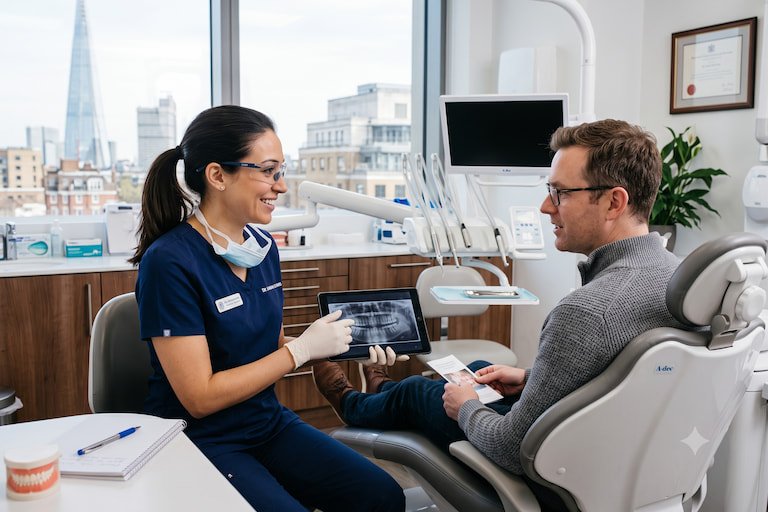
Dental bonding is one of the most effective and durable ways to enhance your smile with the use of composite dental resin (a blend of plastic and glass) that is tinted to match natural teeth. Using dental bonding can repair chipped or cracked teeth, fill in gaps between teeth, change the shape of a tooth and also change the colour of a tooth. Dental bonding can be removed easily without damaging the tooth structure unlike dental veneers which are irreversible.
Dental composite treatment is a popular solution for anyone looking to restore their teeth and have been proven to be very successful. Composite in dentistry allows for a lot of different types of minimally invasive procedures, and if you are interested in learning more about how dental bonding resin works, how have it used, and how it impacts your oral health, read on!
What is composite bonding?
Dental bonding is one of the most common cosmetic dentist procedures available to help improve the look of your smile. Your dentist will use a composite resin for teeth to reshape and alter the size or colour of your teeth to give you the smile you want. Dentists use dental bonding for the following reasons:
- Change the shape of your teeth
- Fill in the gaps between your teeth
- Hide chips and minor cracks in your teeth
- Hide discolouration of your teeth
- Make your teeth appear larger
Those who are embarrassed by how their teeth look can benefit from dental bonding. The process is painless. If you suffer from oral health concerns, such as tooth decay, you will likely require a different type of treatment before undergoing a dental bonding.
What to expect from the dental bonding procedure?
A dental bond can typically be completed by a dentist within one visit to the office. In general, the procedure will follow these steps:
- Your dentist will choose a shade of dental composite resin that matches the colour of your natural teeth using a shade guide. Composite resin is a safe, commonly utilised material used by dentists to repair damage to teeth and to protect the roots of teeth due to gum recession.
- Your dentist will prepare your tooth by roughening the surface and applying a liquid to create an optimal surface for the bonding material to adhere to your tooth effectively.
- After this, your dentist will apply the tooth coloured resin to your tooth in a putty-like consistency before shaping and polishing it to form the adequate contour of your natural tooth.
- Once this has been accomplished, your dentist will harden the bonding material using a curing light, which will bind pre-curser materials to your tooth surface through chemical means.
- Lastly, your dentist will perform any final adjustments or polishing of your tooth to create a natural-looking shine and provide you with a beautiful smile.
Typically, it will require between 30 and 60 minutes per tooth to complete the procedure.
Advantages and Disadvantages of Composite Bonding
Compared to the other types of cosmetic dental treatments, dental bonding offers several advantages. Some of the advantages of dental bonding are:
- It is a minimally invasive procedure: Veneers, crowns, etc., require removing a large amount of enamel to allow the material to stick to the tooth. However, with dental bonding, it is often not necessary to remove any enamel.
- It is affordable: Dental bonding is one of the less expensive types of cosmetic dental procedures available.
- It is versatile and reversible: Dental bonding can help disguise a wide variety of imperfections such as chips, cracks, and gaps. Because there is no need to remove any enamel during the dental bonding process, you will have no permanent alterations to your teeth and the dental bonding procedure can be reversed at any time.
- It is a quick and convenient procedure: For many cosmetic procedures such as veneers and crowns, patients are required to have multiple visits, but with dental bonding, only one office visit is needed.
- It has excellent aesthetics: Cosmetic dental resin is a great medium for restoring damaged teeth. Composite resin appears aesthetically pleasing since it can be matched to the natural colour of your tooth. Composite resin can also be used for other treatments, including crowns, orthodontic brackets, etc.
- It has high durability: Composite resin is known to be strong and durable. This is due to the way composite resin bonds to the structure of the tooth and integrates with the molecules of the enamel, providing it with additional protection. Composite resin can last many years as long as you take care of them properly.
- It is repairable: Composite resin used in dental bonding or for filling and replacing broken restorations can be repaired by the dentist in less time than with other materials used to do so (porcelain restorations). The same type of material (composite resin) can be reapplied at any time after it has been removed from the tooth being treated with either product.
While some composite resins are somewhat stain-resistant, they do not resist staining as much as porcelain restorations do and may chip over a period of time. In most cases, dental bonding is used to create minor cosmetic improvements; porcelain veneers or other treatments may be required for greater improvements.
Disadvantages include the following:
- Microleakage: Composite resin may allow the introduction of air or bacteria from saliva or food into the restoration area, leading to an increased possibility of developing a cavity and subsequent infection of the tooth.
- Shrinkage: Composite resin may shrink over time, which could cause difficulty or instability when creating a secure bond with the tooth. Therefore the likelihood of injury to the tooth is increased.
- Time Required to Place: Patients with difficulty tolerating long periods of being treated while sitting in a dental chair may experience additional issues. This is because prolonged time is required to adequately set the dental bonding composite material as compared with the other types of materials used in dental work.
- Technique Sensitive: Most importantly, the outcome of your treatment hinges upon your dentist’s ability to utilise proper techniques. If the dentist does not perform the bonding process appropriately, the bond could break, causing complications during the patient’s treatment and possible treatment failure.
By how long can I expect to feel better after the composite bonding treatment?
Immediately following your dental bonding procedure, you may experience some temporary sensitivity. However, you should be able to manage this discomfort with over-the-counter medications.
Most times, there are no restrictions after having dental bonding, and all normal activities can resume as soon as the patient leaves the dental office.
What can I do to make this treatment easier on me?
In order to make your treatment easier, ensure that you continue excellent oral hygiene practices post-treatment. Most bonding materials are susceptible to chipping, so it is best to avoid any of the habits listed below:
- Chew or bite your nails
- Chew on objects like pens
- Use teeth as a tool to open packages
If you want to protect your bonding material from dark stain, then you should:
- Limit dark coloured beverage consumption (coffee, tea, red wine)
- Limit consumption of acidic foods (citrus, vinegar)
- Quit smoking (if applicable)
What aftercare tips should I follow for best bonding results?
Dental bonds will likely be less resilient than your existing teeth and with the right lifestyle and good oral hygiene habits you can help them last longer.
To properly care for your dental bonds:
- Brush your dental bonds with non-abrasive toothpaste, using a soft-bristled toothbrush, at least two times per day for a total of two minutes each time.
- Clean between your dental bonds once each day with dental floss, professional dental flossers, or interdental brushes.
- Avoid grinding your teeth together. If you find yourself grinding your teeth at night or while you are awake, it is important to consider the use of a night guard.
- Schedule regular dental check-ups with your dental professional to keep track of your oral health.
Who is a Good Candidate for Composite Tooth Bonding?
You may be a good candidate for bonding if you:
- Are looking to improve the look of your teeth, smile, or space between your teeth, dental bonding may be the right choice for you.
- Have a chipped, broken, cracked, or decayed tooth (or teeth); dental bonding can help restore them.
- Have an exposed root of a tooth, dental bonding can also provide coverage.
However, dental bonding may not be the best option for you if you:
- Need orthodontic treatment to fix a misaligned bite.
- Have an inadequate amount of remaining tooth material to build from.
For many patients, cost plays a significant role when considering dental treatment options. Fortunately, when comparing dental bonding to other cosmetic treatment methods, it is relatively low-cost.
When should I see my dentist?
Before you schedule an appointment for dental treatment, consult with your dentist. They will assess your current condition and will help with the formation of a custom treatment plan that meets your needs.
If you experience temporary discomfort with a bonded tooth or if there are any sharp edges, contact your dentist immediately to have your tooth adjusted.
Conclusion
To learn more about the process of composite resin bonding as a dental treatment, schedule an appointment to speak with a dental care professional. Your dentist will be able to educate you about the different types of bonding procedures available to you, which ones may work best with your individual situation, and how to maintain your teeth so that they can preserve their natural beauty. Contact us today to receive a consultation on composite bonding treatments from our skilled dental professionals.
FAQs
How long does dental bonding work?
The effective lifespan of dental bonding is typically between three to ten years. The longevity of dental bonding will ultimately depend on the dentist’s recommended oral hygiene routine, where the dental bonding is placed on the teeth, as well as how much wear the teeth receive. Good oral hygiene practices as well as regular dentistry visits will help to extend the life of your dental bonding.
Will dental bonding fix gaps in between teeth?
Yes, dental bonding can be used to fill in smaller gaps between teeth. However, for larger gaps, other methods of treatment like orthodontics or getting veneers may be better suited.
Does dental bonding discolour over time?
Although the bonding material used for dental bonding is less likely to discolour compared to other materials, it is still susceptible to staining from substances such as coffee and tea as well as from using tobacco products. To reduce discolouration from the dental bonding material and to maintain its appearance and durability, it is suggested to use tobacco products, coffee or tea in moderation and to practice good oral hygiene habits.
What is composite resin as used in dentistry?
Dental resin (also known as composite resin) is a resin based composite dental material used in dentistry designed to match the natural colour of the tooth and blended in with it. Composite resins for teeth are used by dentists for various types or size of fillings and for complete cosmetic restoration because of its flexibility and sculptability in addition to its strength and durability.
Is composite bonding painful?
The process of composite bonding on teeth is completely painless. You do not need any anaesthesia or drilling. In addition to polishing the existing teeth, a dentist applies resin composite for teeth on top and polishes it up to a very high standard when finished.
Can I have bonding after orthodontic treatment?
Many patients receive composite bonding after orthodontic treatment. When the teeth are misaligned, they are often worn down and broken, particularly the front teeth, due to the stress of being moved back into position. When the braces are removed, we can build up the individual’s teeth with bonding material for teeth to improve their appearance and have straight, properly shaped teeth.
Is bonding for damaged and discoloured teeth?
We can also provide composite bonding to damaged and discoloured teeth, and we can often do this without anaesthetic. We can do so by removing the top layer of damaged areas on the tooth’s surface, which is usually only a small amount of decay. The result is a restored tooth, often with a near-perfect appearance.
Is it possible to whiten bonded teeth?
Unlike natural teeth, you do not have to treat bonded tooth surfaces (composite resins) in the same manner as the originals. You can still receive whitening treatments. However, the composite resins will not be whitened.
Is dental bonding natural looking?
To help your dental bonding blend with the colour of nearby teeth, we will match the shade of composite material to your natural tooth colour. When teeth are whitened via hydroxylation, our composite materials are shaded to look the same as your remaining teeth. This ensures a natural-looking smile!
Does coffee cause stains on bonding material?
Yes, like original teeth, dental bonding can be stained. Patients who regularly consume coffee may find that dental bonding materials will become stained over time. The use of darker beverages increases the risk of staining.
Can you eat normally after having composite bonding applied?
Composite bonding applied to your teeth will take approximately 24 hours to completely cure and harden. For optimum comfort, you should follow a soft food diet for the first 24 hours. After curing, you may resume a normal diet.
How long does dental bonding usually take?
How long it takes to undergo a tooth bonding treatment depends on the severity of your condition and how many teeth will be treated. On average, bonding one tooth will typically take between 30 to 60 minutes. This is considered faster than other forms of cosmetic dentistry. The amount of time required will depend on the complexity and seriousness of the problem, as well as the nature of the teeth being bonded.
Will my bonded teeth be visible to others?
A bonded tooth is designed to look as close to your natural tooth as possible in both colour and shape. Therefore, it should not be visible to those around you. The dentist will carefully match the colour of the bonded material to the colour of your natural tooth, which helps to create an illusion that your tooth is like any other tooth in your mouth. After the bonding procedure, if you take care to maintain your bonded teeth, they should be able to be indistinguishable from natural teeth.
