


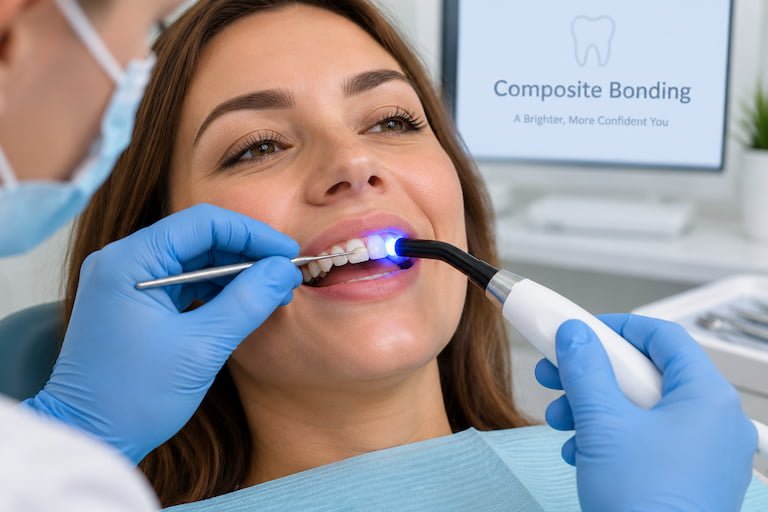
Composite bonding cost in the UK typically falls somewhere between £150 and £400 per tooth, though the final figure for any individual treatment plan depends on the number of teeth involved, how much composite is needed, the complexity of the work, and the practice carrying it out. There is no single national price, and any figure quoted online should be treated as a starting point rather than a personal estimate.
Most of the confusion around bonding prices comes from treating a per-tooth figure as if it simply multiplies out to a full treatment cost, when in practice quotations depend on far more than tooth count alone. This guide works through per-tooth pricing, full-set and edge bonding costs, what typically drives the price up or down, and how to compare quotations properly before booking.
What Is Composite Bonding?
Composite bonding is a cosmetic dental treatment in which tooth-coloured resin is applied directly to a tooth and shaped by the dentist to close gaps, repair chips, or adjust minor shape irregularities, usually completed in a single visit without the need for a dental laboratory.
Understanding what the treatment actually involves matters before comparing prices, since the amount of composite used, the number of surfaces treated, and the complexity of shaping all directly affect cost. Readers wanting a fuller explanation of the procedure itself, separate from pricing, can refer to the dedicated guide on the composite bonding treatment and its benefits.
How Much Does Composite Bonding Cost in the UK?
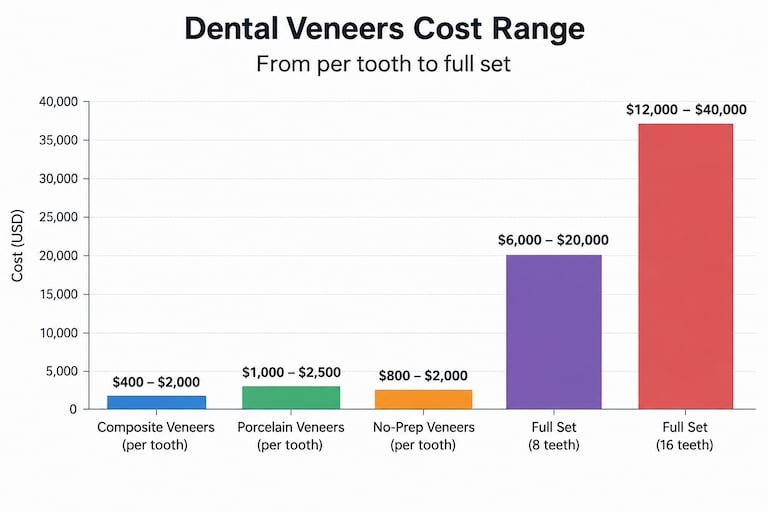
As a general UK guide, composite bonding tends to cost between £150 and £400 per tooth, with treatment involving several teeth or more complex reshaping sitting toward the higher end of that range, and simpler, smaller corrections often costing less.
It’s worth being clear about what kind of figure is being quoted: an indicative range like this reflects typical UK pricing across many practices, a per-tooth price reflects one part of a larger treatment, and a full quotation is the total cost after a dentist has examined the teeth and confirmed exactly what’s needed. Only the last of these should be treated as a reliable number for planning a budget. For readers exploring composite bonding as part of a wider cosmetic plan, cosmetic dentistry explained provides useful context on how bonding fits alongside other treatments.
How Much Is Composite Bonding Per Tooth?
Composite bonding per tooth in the UK generally costs between £150 and £400, though the exact figure depends on the tooth’s location, how much composite is needed, the complexity of the shape change, and how much finishing and polishing the result requires.
Per-tooth pricing is a useful reference point but can be misleading when comparing overall treatment cost, since a quote for several teeth isn’t always a straightforward multiple of the single-tooth figure. Front teeth often need more careful shade-matching and finishing than back teeth, which can affect the per-tooth price even within the same treatment plan, and a tooth with more extensive damage will typically cost more to bond than one needing only a small edge correction.
How Much Does Composite Bonding Cost for Multiple Teeth?
Composite bonding for multiple teeth doesn’t scale in a strictly linear way from a single-tooth price, since treating several teeth together often involves additional planning to keep shade and shape consistent across the whole treated area, which can affect the overall quotation beyond simply adding up individual tooth costs.
Some practices offer a slightly reduced rate per tooth when several are treated in the same visit, reflecting efficiencies in time and materials, while others price each tooth individually regardless of how many are being treated. This is one of the clearest reasons a proper quotation, rather than a per-tooth estimate, is needed before budgeting for multi-tooth bonding.
How Much Does Full-Set Composite Bonding Cost in the UK?
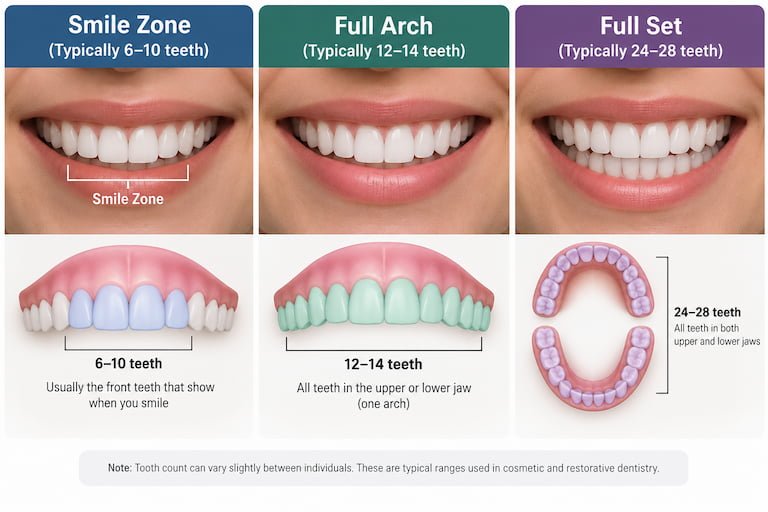
“Full set” composite bonding doesn’t have one fixed meaning — it might refer to the visible smile zone (typically six to ten upper teeth), a full arch, or both arches — so the cost depends entirely on how many teeth are actually included, which should always be confirmed before comparing prices between practices.
Using the typical £150–£400 per-tooth range as a starting point, a smile-zone treatment covering around eight teeth might fall roughly between £1,200 and £3,200, while a more extensive full-arch or dual-arch plan would cost proportionally more. These are illustrative figures only, and the phrase “full set” should always be clarified with a specific tooth count before it’s used to compare quotations. For readers weighing bonding against a broader combination of treatments, the guide to broader cosmetic dental costs covers how bonding sits alongside other procedures cost-wise.
How Much Does Composite Edge Bonding Cost?
Composite edge bonding — used for minor corrections such as a small chip or a slightly uneven edge — typically costs less than bonding that covers a larger surface area of the tooth, since it involves less composite material and generally less shaping and finishing time.
Because edge bonding addresses a narrower cosmetic concern than full-surface bonding, it’s worth confirming exactly what a quoted price covers before comparing it to a more complete bonding treatment; a low edge-bonding price isn’t directly comparable to a higher quote for full-tooth reshaping, since the two involve different amounts of work. For very minor shape adjustments, it’s also worth considering whether tooth contouring options, which reshape existing enamel rather than adding composite, might address the concern at a similarly modest cost.
How Much Does Front Tooth Composite Bonding Cost?
Front tooth composite bonding often falls within the same general £150–£400 per-tooth range as bonding elsewhere in the mouth, though it can sit toward the higher end where shade-matching, symmetry with neighbouring teeth, and finishing detail are more demanding than they would be for a less visible tooth.
Because front teeth are the most visible part of the smile, dentists typically spend more time layering and polishing composite here to achieve a natural-looking result, which can be reflected in the price even without a formal “front tooth premium.” Rather than assuming a fixed extra charge applies, it’s more accurate to expect that the additional aesthetic care involved is one of several factors feeding into the final quotation.
What Factors Affect Composite Bonding Cost?
Composite bonding cost is shaped by the number of teeth treated, the amount of composite required, treatment complexity, the dentist’s experience, geographic location, the condition of the tooth being treated, existing dental work, shade-matching demands, any preliminary treatment needed, and future maintenance or repair requirements.
Number of teeth is the most obvious driver, but treatment complexity — how much reshaping is needed and how carefully it must blend with neighbouring teeth — often matters just as much. Dentist experience can affect fees, with more experienced cosmetic dentists sometimes charging more for a specific skill set. Geographic location plays a role too, with London and the South East generally more expensive than other parts of the UK. Tooth condition and existing dental work can add cost where preliminary treatment is needed before bonding can proceed, and ongoing repairs and maintenance add to the cost over the lifetime of the treatment even though they’re separate from the initial quote. Readers wanting to understand how bonding cost compares within the wider field can refer to cosmetic dental treatment options for broader context.
What Does a Composite Bonding Price Usually Include?
A composite bonding price usually includes the consultation or examination, treatment planning, the composite material itself, application and shaping, polishing, and often a short follow-up appointment to check the result and make minor adjustments — though exactly what’s bundled into a single quoted figure varies between practices.
Because inclusions aren’t standardised across the industry, it’s worth asking directly whether the quoted price covers the initial consultation, any necessary X-rays, and a follow-up visit, or whether these are billed separately. A quotation that looks lower than average may simply exclude elements that a more expensive quote includes as standard.
Are There Extra Costs With Composite Bonding?
Possible extra costs with composite bonding include the initial examination, X-rays where clinically needed, treatment of any existing oral health problems before bonding proceeds, future repairs, eventual replacement, and ongoing hygiene appointments — though not every patient will incur all of these, and it depends heavily on individual circumstances.
Treating decay or gum disease before cosmetic bonding, for instance, is a cost some patients won’t need at all if their oral health is already stable, while others may find it adds meaningfully to their total spend. It’s reasonable to ask a dentist directly what additional costs might realistically apply in a specific case, rather than assuming the headline bonding price is the only cost involved.
Is Composite Bonding Available on the NHS?
Composite bonding is not generally available on the NHS when carried out for purely cosmetic reasons, since NHS dental care is focused on treating disease, damage, and functional problems rather than improving appearance; NHS provision depends on clinical necessity rather than a patient’s cosmetic preference.
Where bonding is used to repair a tooth damaged by decay or injury, part of that treatment may fall within NHS scope depending on individual assessment and current NHS arrangements, but this is different from bonding chosen purely to improve shape or colour. Readers considering cosmetic treatment more broadly, including as an alternative to bonding, may find the comparison of composite and porcelain veneer differences useful when weighing private options against each other.
Composite Bonding Cost vs Veneers
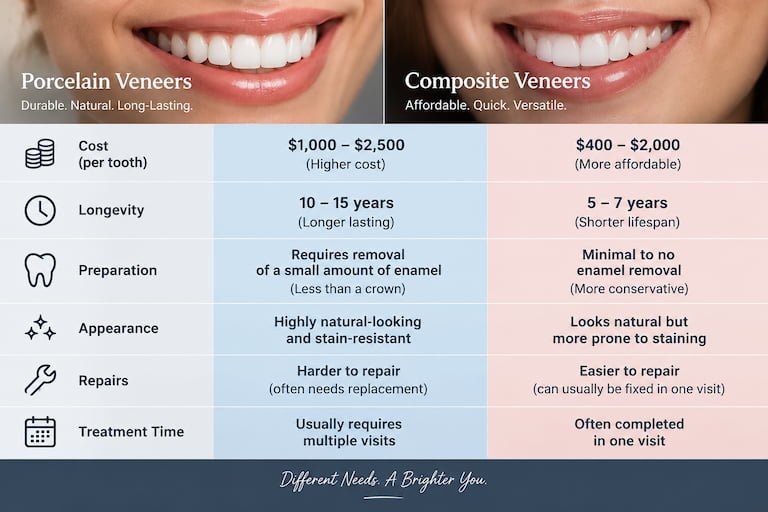
Composite bonding is generally less expensive upfront than porcelain veneers, requires little to no tooth preparation, and can usually be completed in a single visit, whereas veneers typically cost more, involve some enamel removal, and require laboratory fabrication — but veneers tend to last considerably longer, which affects overall value.
Neither option is universally better: bonding suits patients who want a lower-cost, reversible-leaning treatment for moderate shape or gap correction, while veneers suit those seeking a longer-lasting, more resistant result and are willing to accept a higher initial cost and some permanent tooth preparation. Longevity, repairability, and how much natural tooth structure each approach preserves are all worth weighing alongside the headline price difference.
Composite Bonding Cost vs Teeth Whitening
Composite bonding and teeth whitening address different concerns and aren’t directly comparable on cost alone — whitening changes tooth shade without altering shape, while bonding can change both shape and shade, meaning the “cheaper” option depends entirely on which concern is actually being addressed.
For a purely colour-related concern, whitening is typically the lower-cost and less invasive route, while bonding becomes relevant once shape, chips, or gaps are part of the picture. Many patients use both together, with whitening completed first so that any bonding can be shade-matched to the newly whitened teeth. The guide to professional teeth whitening options covers this treatment in more depth for readers whose main concern is shade rather than shape.
Is Composite Bonding Worth the Cost?
Whether composite bonding is worth the cost depends on the specific cosmetic concern, the number of teeth involved, budget, how long the patient wants the result to last, and their willingness to keep up with maintenance and eventual repair or replacement — value is a more useful framework here than price alone.
For someone with a single chip or minor gap, bonding often represents good value as a low-cost, low-intervention fix. For someone considering a larger, longer-term smile change, the shorter lifespan and greater susceptibility to staining or chipping compared with porcelain alternatives may reduce its relative value over time, even though the upfront cost is lower. There’s no universal answer — only a comparison worth making against the specific goal in mind.
How Long Does Composite Bonding Last?
Composite bonding typically lasts around five to seven years, though this varies depending on the material used, the location of the treated tooth, bite forces, oral hygiene, diet, and habits such as nail-biting or teeth grinding, meaning individual results can fall well outside this range in either direction.
Teeth exposed to heavier biting forces, or patients who grind their teeth at night, tend to see bonding wear or chip sooner than average, while good oral hygiene and avoiding hard foods can help a repair last toward the longer end of the typical range. No dentist can guarantee an exact lifespan for any individual case, since so much depends on factors outside the treatment itself.
What Maintenance Does Composite Bonding Require?
Composite bonding requires ongoing oral hygiene, regular dental examinations, and occasional professional polishing, along with reasonable care to avoid staining foods and hard biting, since bonded teeth are more prone to surface staining and chipping than natural enamel or porcelain.
Maintenance also has a cost dimension worth factoring into the overall value of the treatment: occasional polishing, eventual repair of a chipped edge, or full replacement after several years all add to the lifetime cost beyond the initial quotation. Readers comparing bonding against longer-lasting alternatives should weigh this ongoing cost, not just the upfront price, when judging overall value.
How to Compare Composite Bonding Prices Safely
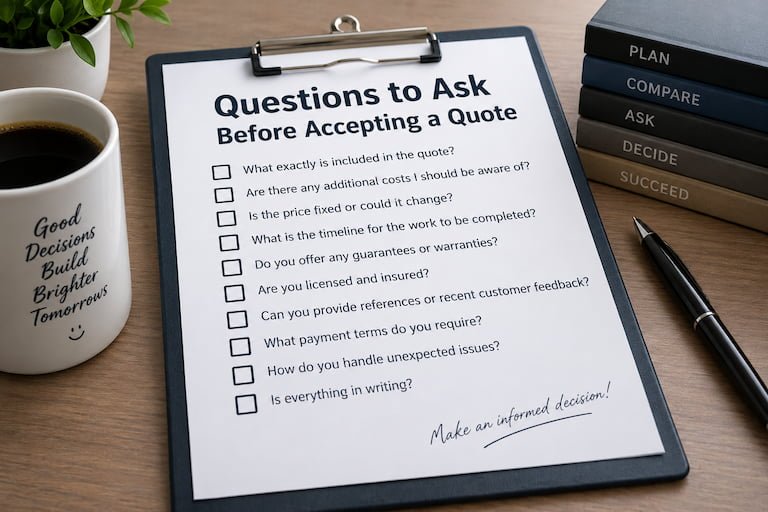
Comparing composite bonding prices safely means confirming the exact number of teeth involved, checking what treatment is included in the quote, confirming whether the consultation is part of the price, asking about follow-up and repair arrangements, and comparing the scope of treatment rather than the headline figure alone.
A useful checklist before accepting any quotation: confirm the number of teeth, ask exactly what’s included, check whether consultation and any necessary preparation are covered, ask what happens if a repair is needed later, and confirm whether the quoted figure is an indicative estimate or a final price following assessment. Cosmetic Smile Guide’s broader look at factors affecting composite bonding prices goes into more depth on this comparison process for readers weighing several quotes side by side.
UK Cost Comparison Tables
Composite Bonding Cost Framework
| Treatment Scope | Typical UK Cost Range |
|---|---|
| Single tooth (edge/minor correction) | £100–£250 |
| Single tooth (full surface bonding) | £150–£400 |
| Multiple teeth (per tooth, treated together) | £150–£350 per tooth |
| Front tooth (higher aesthetic demand) | £200–£400 |
| Smile-zone treatment (approx. 6–10 teeth) | £1,200–£3,200 |
| Full arch/full-set treatment | £2,000–£5,000+ |
These are indicative UK ranges only; a personal quotation always follows an in-person assessment.
Factors Affecting Cost
| Cost Factor | Why It Can Affect Price |
|---|---|
| Number of teeth | More treatment generally increases total scope |
| Treatment complexity | More planning and material may be required |
| Tooth location | Visible teeth may require more detailed aesthetic work |
| Existing dental condition | Preliminary treatment may be required |
| Dentist experience | Fees can vary between clinicians |
| Location | UK dental fees vary geographically |
| Materials | Material selection can affect treatment cost |
| Maintenance | Repairs and future replacement can add long-term cost |
Composite Bonding vs Alternatives
| Aspect | Composite Bonding | Porcelain Veneers | Teeth Whitening | Composite Veneers |
|---|---|---|---|---|
| Main purpose | Shape/gap correction | Shape, shade, size change | Shade change only | Shape and shade change |
| Relative cost | Lower | Higher | Lowest | Moderate |
| Tooth preparation | Minimal to none | Some enamel removal | None | Minimal |
| Longevity | 5–7 years | 10–15+ years | 6 months–2 years | 5–8 years |
| Repair considerations | Repairable chairside | Typically needs replacement | Not applicable | Repairable chairside |
| Suitability | Moderate shape/gap concerns | Significant, longer-term change | Colour-only concerns | Moderate change, lower budget |
Frequently Asked Questions
How much does composite bonding cost for one tooth?
A single tooth typically costs between £150 and £400, depending on how much composite is needed and how complex the shape correction is, with minor edge work usually costing less than full-surface bonding.
Is composite bonding cheaper than veneers?
Yes, in most cases composite bonding costs less upfront than porcelain veneers, though veneers generally last longer, which is worth weighing against the lower initial price of bonding.
How much does bonding a front tooth cost?
Front tooth bonding often falls within the typical £150–£400 range, though it may sit toward the higher end where shade-matching and finishing detail are more demanding than on a less visible tooth.
How much does edge bonding cost?
Edge bonding for a minor chip or uneven edge typically costs less than full-surface bonding, often in the region of £100–£250, since less composite and finishing time is involved.
Can composite bonding be done on one tooth?
Yes, composite bonding can be carried out on a single tooth, and this is one of the most common ways the treatment is used, particularly for a chip or small gap.
Is composite bonding available through the NHS?
Generally not for purely cosmetic reasons, since NHS dental care focuses on clinical necessity rather than appearance, though bonding used to repair damage from decay or injury may fall within NHS scope depending on assessment.
Does composite bonding require maintenance?
Yes — ongoing oral hygiene, regular checkups, and occasional polishing are typically needed, and bonded teeth may eventually need repair or replacement, usually within five to seven years.
Can composite bonding be repaired if it chips?
In most cases, yes — because bonding is applied directly to the tooth, a dentist can usually repair a chip or small area of damage without needing to redo the entire treatment.
Does the cost increase significantly for multiple teeth?
Generally yes, since more teeth means more material and treatment time, though some practices offer a slightly reduced per-tooth rate when several teeth are treated together in one visit.
What should a composite bonding quotation include?
A clear quotation should specify the number of teeth, what’s included (consultation, treatment, follow-up), whether any preparation is needed, and how repairs would be handled if something needs adjusting later.
Clinical Disclaimer
This article is intended for general educational purposes only and should not replace personalised advice from a qualified dental professional, and it is provided as part of Cosmetic Smile Guide’s independent educational coverage of UK cosmetic dentistry. Composite bonding suitability, treatment costs, and expected outcomes vary depending on individual oral health and clinical assessment. Where symptoms such as pain, swelling, or injury are present, readers should seek urgent dental care or contact NHS 111 rather than treating the concern as cosmetic.
