


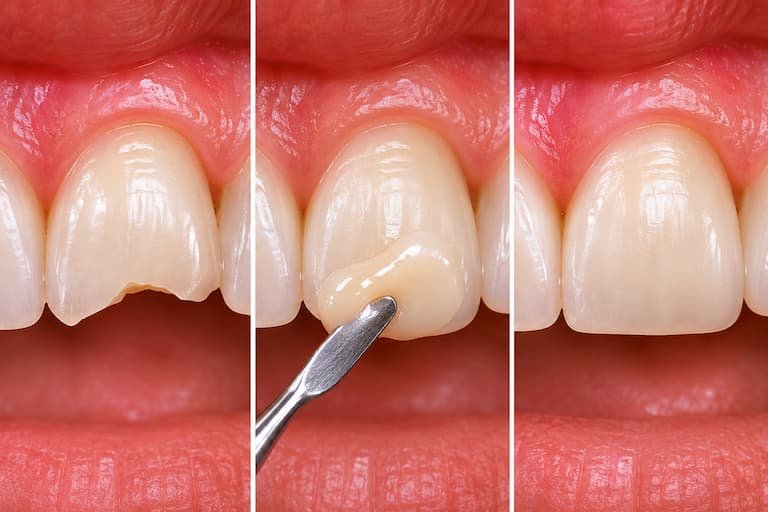
Composite bonding is a cosmetic and restorative dental treatment in which tooth-coloured composite resin is applied directly to a tooth and shaped to repair a chip, close a small gap, or adjust minor shape irregularities. It’s one of the more conservative options in cosmetic dentistry, since it generally adds material to the tooth rather than removing it, though suitability still depends on the specific tooth and concern.
The term gets used loosely online, often interchangeably with veneers or general “tooth bonding,” which creates genuine confusion about what the treatment actually involves and what it’s realistically suited for. This guide sets out the material, the main uses, suitability considerations, benefits, risks, longevity, and alternatives — a foundation to work from before looking at the detailed procedure or cost separately. For a sense of how bonding sits within the broader field, cosmetic dentistry explained covers the wider category this treatment belongs to.
What Is Composite Bonding?
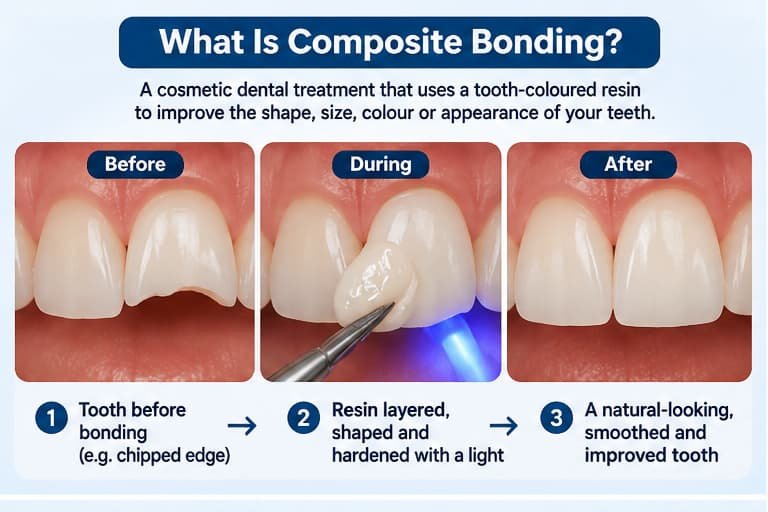
Composite bonding is a dental treatment in which a dentist applies tooth-coloured composite resin directly onto a tooth, shaping and polishing it by hand to repair damage, close small gaps, or refine the tooth’s appearance, usually completed in a single appointment without a dental laboratory.
Because the resin is sculpted at the chairside rather than manufactured off-site, the result depends heavily on the dentist’s skill in layering and shading the material to match the surrounding teeth. This also means treatment can often be adjusted or finished within the same visit, rather than requiring a follow-up appointment to fit a separately made restoration. For a fuller walkthrough of each stage involved, the dedicated guide to the composite bonding procedure and benefits covers the clinical process in more depth than this introductory guide is intended to.
What Does Composite Bonding Do?
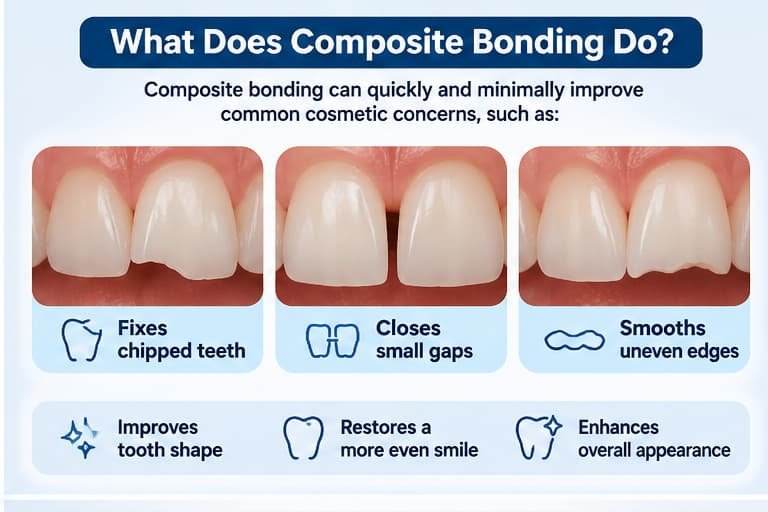
Composite bonding addresses cosmetic and minor restorative concerns such as chipped teeth, small gaps between teeth, uneven edges, and selected shape irregularities, by adding and shaping resin rather than altering the underlying tooth structure.
It isn’t a single-purpose treatment — the same material and technique can repair a corner broken off a front tooth, close a gap that bothers a patient cosmetically, or even out two teeth of slightly different lengths. Where the concern is more about a rough or uneven edge than missing structure, a dentist might consider tooth contouring options instead, since contouring removes a small amount of enamel rather than adding material, and the two approaches aren’t interchangeable for every case.
What Is Composite Resin Bonding?
Composite resin bonding uses a tooth-coloured material made of a resin base combined with fine particles of glass or ceramic filler, which is applied in layers, shaped by the dentist, and then hardened using a curing light, bonding to the tooth surface through a dental adhesive.
Different composite formulations — including nanofill composites, which use very fine particles to achieve a smoother, more natural-looking finish — affect both appearance and durability, and a dentist will typically select the material and shade based on the specific tooth and desired result. Material choice sits within the much broader set of techniques covered under the wider field of cosmetics in dentistry, which also includes material-based treatments like veneers and crowns that use different substances entirely.
Can Composite Bonding Repair Chipped Teeth?
Yes, composite bonding can repair many chipped teeth, particularly smaller chips affecting the visible edge or corner of a tooth, though suitability depends on the size of the chip, the remaining tooth structure, and how much force that tooth typically bears when biting or chewing.
A small chip on a front tooth is often straightforward to repair with bonding, since the forces involved are relatively light and the cosmetic result is usually the main priority. A larger chip, or one on a tooth that takes significant bite force, may need a different approach — such as a crown — since bonding has limits on how much structural rebuilding it can reliably support long-term.
Is Composite Bonding Suitable for Front Teeth?
Composite bonding is commonly used on front teeth, where shade-matching, tooth shape, and visible symmetry matter most, though suitability also depends on bite forces and how well the patient is likely to maintain the result afterwards.
Front teeth are usually bonded for cosmetic reasons — closing a gap, repairing a chip, or refining shape — and the aesthetic outcome depends heavily on how carefully the composite is layered and polished to match surrounding teeth. For patients wanting a more substantial or longer-lasting change to front-tooth appearance, it’s worth comparing composite bonding versus composite veneers, since veneers can achieve a more significant shape or shade change, at a different cost and commitment level.
Can Composite Bonding Close Gaps Between Teeth?
Composite bonding can close small to moderate gaps between teeth by adding resin to the sides of the adjacent teeth, though it’s generally more suitable for smaller gaps, since very wide spacing may be better addressed through orthodontic treatment or a combination of approaches.
Whether bonding alone is appropriate depends on the width of the gap relative to the teeth involved and how natural the resulting tooth proportions will look once closed. For wider or multiple gaps across several teeth, an orthodontic assessment is often worth having first, since moving the teeth closer together may reduce how much bonding is ultimately needed, or make the result look more proportionate than bonding alone could achieve.
What Are the Benefits of Composite Bonding?
Composite bonding offers several practical benefits: it’s generally conservative in terms of tooth preparation in suitable cases, can usually be completed in a single visit, allows for shade and shape adjustments at the chairside, and is typically repairable rather than requiring full replacement for minor damage.
These benefits make bonding a flexible option for patients wanting a lower-commitment cosmetic change, but they don’t make it suitable for every concern. A dentist weighing bonding against other treatments is balancing this flexibility against the material’s relative durability compared with options like porcelain, which tends to hold up better under heavier wear over time.
What Are the Limitations and Risks of Composite Bonding?
Composite bonding carries genuine limitations and risks, including a tendency to stain or discolour over time, susceptibility to chipping or wear compared with porcelain, the eventual need for repair or replacement, and reduced suitability for teeth under heavy bite forces or significant grinding.
Composite bonding is not completely risk-free or damage-free, despite sometimes being marketed that way — while it’s generally additive, the tooth surface may still need light preparation in some cases to help the material bond properly, and the restoration itself can fail if placed on a tooth that isn’t a good match for the technique. Where a concern turns out to need more than bonding can reliably provide, alternatives such as dental veneers and their maintenance are worth discussing with a dentist instead.
Does Composite Bonding Damage Teeth?
Composite bonding is often described as additive and conservative, but whether it affects natural tooth structure depends on the individual case, the technique used, and whether any preparation is needed — it isn’t accurate to say bonding never affects the tooth at all.
In many cases, little to no enamel is removed, and the resin is applied directly onto the existing tooth surface. In some situations, however, a dentist may lightly roughen the enamel to help the composite adhere properly, which is a minor but real alteration to the tooth surface. Existing decay or gum disease should also be treated first, since bonding placed over an unresolved problem doesn’t address the underlying issue and can make it harder to monitor.
How Long Does Composite Bonding Last?
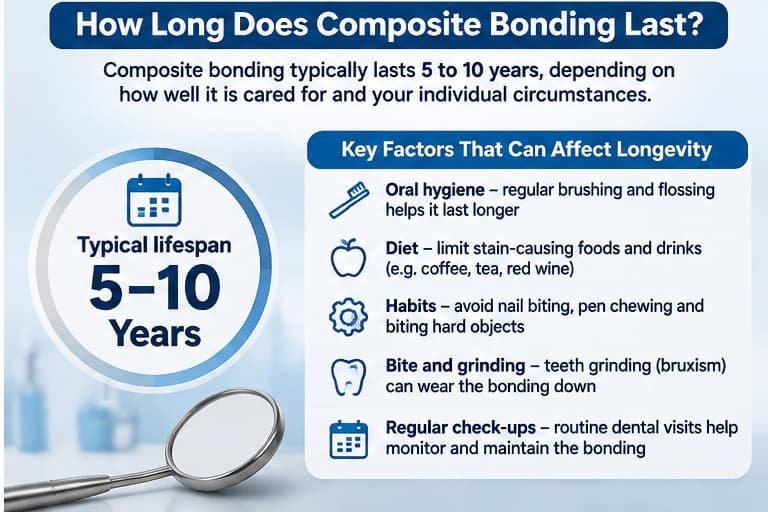
Composite bonding typically lasts around five to seven years, though this varies considerably depending on the material used, the location of the tooth, bite forces, oral hygiene, diet, and habits such as nail-biting or teeth grinding, meaning individual results can fall well outside this general range.
Teeth under heavier bite forces, or patients who grind their teeth at night, tend to see bonding wear or chip sooner than average. Mild sensitivity in the treated tooth is also possible in the days following treatment, particularly if any preparation was needed beforehand; for readers experiencing lingering sensitivity after cosmetic dental work generally, managing dental sensitivity covers practical steps that apply beyond whitening specifically.
How Should Composite Bonding Be Maintained?
Composite bonding needs the same daily oral hygiene as natural teeth, along with regular dental reviews to monitor wear, staining, and the condition of the bonded surface, plus reasonable care around biting hard foods or using teeth as tools, since bonded edges are more prone to chipping than natural enamel or porcelain.
Occasional professional polishing can help refresh the surface and reduce the appearance of staining between replacements. Because bonding is repairable rather than requiring full removal for minor damage, a dentist can often touch up a small chip directly, which is one of the more practical advantages of the material over time.
What Are the Alternatives to Composite Bonding?
Alternatives to composite bonding include dental veneers for more substantial shape or shade change, dental crowns where structural rebuilding is needed, orthodontic treatment for alignment or spacing concerns, and tooth contouring for very minor shape refinements — with the right choice depending on the scale of the concern rather than personal preference alone.
None of these alternatives is universally better than bonding; each addresses a different scale or type of concern. A patient considering a broader set of changes across several teeth, rather than one isolated chip or gap, may find it useful to look at the wider range of cosmetic dental treatment options available, since bonding is often just one component within a larger treatment plan rather than a standalone solution.
Is Composite Bonding Worth Considering?
Whether composite bonding is worth considering depends on the specific concern, how much change is realistically needed, budget, willingness to maintain the result over time, and whether a less or more durable alternative would serve the goal better — there’s no universal answer that applies to every patient or every tooth.
For a single chip or small gap, bonding often represents a sensible, lower-commitment starting point. For a more extensive cosmetic goal involving several teeth, bonding is frequently used as one part of a broader plan — Cosmetic Smile Guide’s guide to smile makeovers explains how bonding fits alongside other treatments in that kind of combined approach. Readers curious about what bonding is likely to cost once suitability is confirmed can also refer to the dedicated composite bonding cost guide for a fuller breakdown, since cost isn’t covered in detail here. For concerns that are really about tooth colour rather than shape, professional teeth whitening options may be a simpler starting point than bonding altogether.
Comparison Tables
Composite Bonding Uses and Suitability
| Concern | Suitable for Bonding? | Notes |
|---|---|---|
| Small chip | Usually yes | Especially on lower-bite-force teeth like front teeth |
| Large chip or structural damage | Sometimes, sometimes not | May need a crown instead depending on remaining structure |
| Small to moderate gap | Usually yes | Wider gaps may need orthodontic assessment first |
| Uneven edge (minor) | Possibly, or contouring instead | Depends whether material needs adding or removing |
| Significant shade/shape change | Not ideal | Veneers often more appropriate |
| Heavy grinding/bruxism | Caution needed | Higher risk of chipping or wear |
Benefits and Limitations
| Benefits | Limitations |
|---|---|
| Often conservative, minimal tooth preparation | Not entirely risk- or damage-free in every case |
| Usually completed in one visit | More prone to staining and chipping than porcelain |
| Repairable for minor damage | Eventually needs repair or replacement |
| Shade and shape adjustable at chairside | Less suitable for heavy bite forces or significant grinding |
Composite Bonding vs Alternatives
| Aspect | Composite Bonding | Veneers | Crowns | Tooth Contouring |
|---|---|---|---|---|
| Material approach | Adds resin | Adds porcelain/composite shell | Full-coverage cap | Removes enamel |
| Typical use | Chips, gaps, minor shape | Significant shape/shade change | Structural rebuild | Minor edge refinement |
| Tooth preparation | Minimal to none | Some (porcelain) | Significant | Minimal |
| Repairability | Repairable chairside | Often needs replacement | Durable, less repairable | Permanent, no repair needed |
Longevity and Maintenance Considerations
| Factor | Effect on Longevity |
|---|---|
| Bite forces / grinding | Shortens expected lifespan |
| Oral hygiene | Supports longer-lasting results |
| Staining habits (coffee, tea, smoking) | Can dull appearance over time |
| Regular dental reviews | Allows early repair before bigger issues develop |
Frequently Asked Questions
What is composite bonding made of?
Composite bonding uses a resin-based material combined with fine glass or ceramic particles, applied in layers and hardened with a curing light, bonded to the tooth with a dental adhesive.
Can you eat normally straight after composite bonding?
In most cases, yes, though a dentist may suggest avoiding very hard or sticky foods for a short period while the bite settles and the restoration is checked.
Does composite bonding stain easily?
It can stain more than porcelain, particularly with regular coffee, tea, red wine, or smoking, though good oral hygiene and occasional polishing can help manage this over time.
Can composite bonding be repaired if it chips?
In most cases, yes — a dentist can usually repair a small chip or area of wear directly, without needing to remove and redo the entire restoration.
Can composite bonding be removed?
Often, yes, since the material sits mostly on the tooth surface, though this depends on whether any preparation was done underneath, and removal should always be carried out by a dentist.
Is composite bonding suitable for people who grind their teeth?
It can be more vulnerable to chipping or wear under heavy grinding, so a dentist may recommend a night guard alongside treatment, or suggest an alternative material in more severe cases.
How soon can composite bonding be touched up if the shade changes?
This depends on the cause — if surrounding teeth have changed shade through whitening or staining, a dentist can usually assess whether the bonding needs refreshing to match.
Is composite bonding painful?
Most composite bonding involves little to no discomfort, since it’s often placed without removing much tooth structure, though mild sensitivity is possible for a short period afterwards in some cases.
Can composite bonding be used on back teeth?
It can be, particularly for smaller repairs, though back teeth bear heavier bite forces, which can affect how long bonding lasts there compared with front teeth.
Is composite bonding a permanent treatment?
No — while the change it creates is long-lasting with proper care, composite bonding is not considered a permanent, one-time treatment and will eventually need maintenance, repair, or replacement.
Clinical Disclaimer
This article provides general educational information and does not replace an individual examination, diagnosis, or treatment plan from a registered dental professional. Suitability for composite bonding depends on the specific tooth, bite, and oral health, which can only be properly assessed in person. Where a tooth is painful, broken, or causing ongoing discomfort, readers should seek prompt dental assessment or contact NHS 111 rather than treating the concern as purely cosmetic.

1 Comment
Pingback: Tooth Filling: Types, Procedure, Costs and Aftercare